
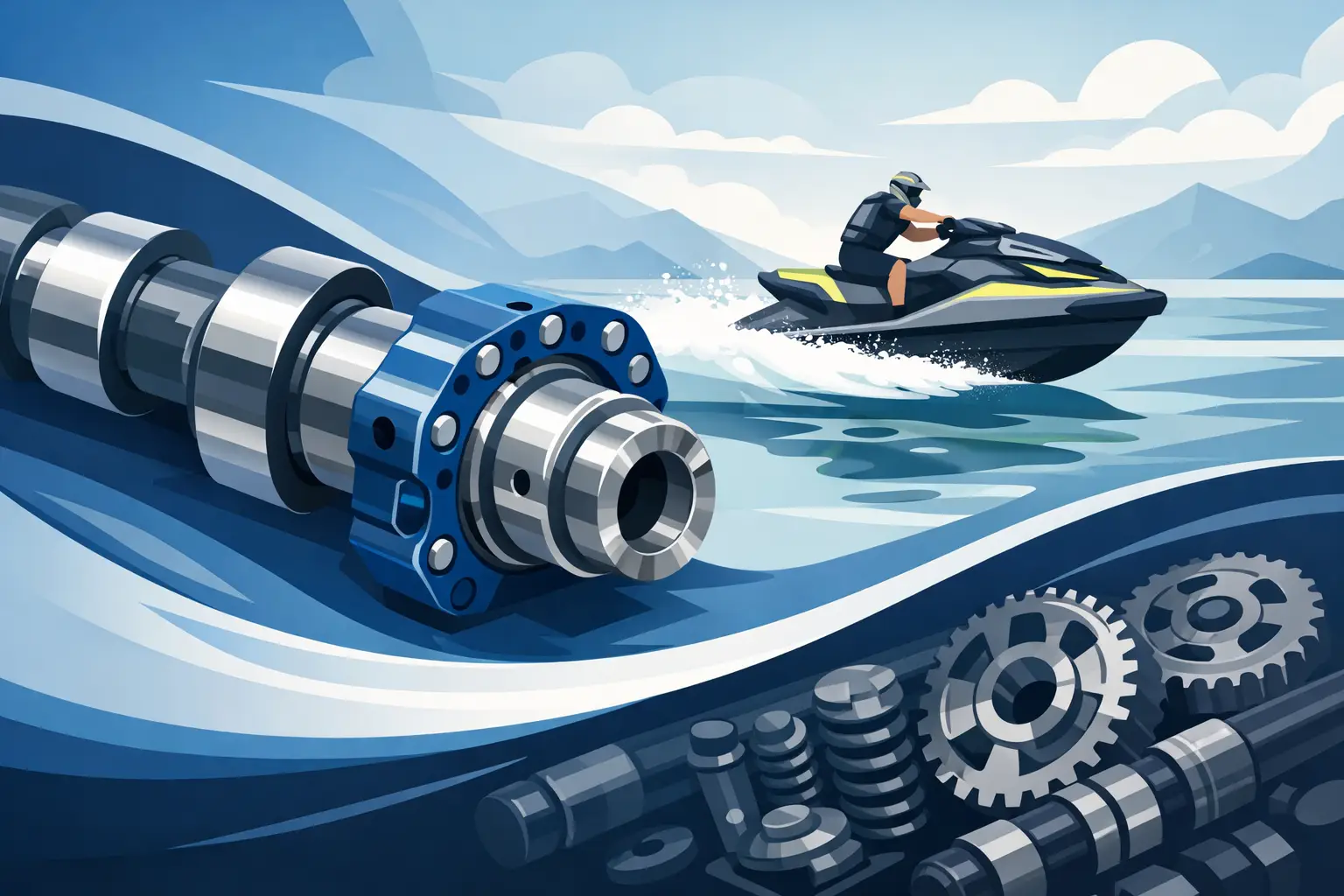
A Sea-Doo 300 325 VJP billet camshaft is not a bolt-on shortcut to big power. It is a serious valvetrain component for riders building a 1630 ACE platform that needs to hold valve control at higher rpm, handle increased cylinder pressure and make the most of the supporting hardware already on the ski.
For a stock recreational Sea-Doo, a camshaft swap may not be the first dollar to spend. For a properly planned performance or race build, however, camshaft selection can be the difference between an engine that feels restricted up top and one that delivers clean, repeatable power without sacrificing the reliability you built it for.
What a VJP Billet Camshaft Changes
The camshaft controls when the inlet and exhaust valves open, how far they lift and how long they remain open. Those events determine how efficiently the engine fills each cylinder, clears exhaust gases and responds as rpm climbs. On a supercharged Sea-Doo, that valve timing has to work with boost pressure, airflow, fuel delivery and ECU calibration rather than in isolation.
A VJP billet camshaft is designed for owners who are past basic intake and tune modifications. Its profile is intended to support stronger airflow and stable valvetrain operation where a higher-output 300 or 325 build places greater demands on the factory setup. The aim is not simply a louder engine or a larger peak number on paper. The aim is usable power through the rev range, predictable throttle response and a combination that can survive hard riding.
Billet construction matters because the camshaft is a highly loaded component. Each lobe repeatedly operates the valve train at speed, while the engine is dealing with heat, boost and sustained rpm. Quality material, accurate machining and correct lobe geometry give an engine builder a dependable foundation. But even the best billet cam cannot compensate for poor installation, unsuitable valve springs or a tune that does not match the engine.
Who Should Consider a Sea-Doo 300 325 VJP Billet Camshaft?
This upgrade makes the most sense when the ski has a clear performance direction. That may be a high-boost supercharger package, upgraded intercooler, injectors, exhaust work, revised intake path or forged-engine build. It can also suit a race-focused watercraft where the rider is chasing stronger top-end performance and spends considerable time at elevated rpm.
A camshaft is less compelling for an owner whose priority is relaxed cruising, low operating cost and factory-like service intervals. More aggressive valve timing can move the engine’s character higher in the rev range. Depending on the complete combination, low-rpm behaviour, idle quality and fuel requirements may change. That is not a fault – it is the trade-off involved in building for airflow and power at higher engine speed.
The right question is not, ‘Will this cam add power?’ It is, ‘Does this cam suit the way this engine is built and ridden?’ A well-matched package delivers more than a dyno result. It gives the rider confidence that the engine, driveline and tune are working towards the same target.
Supporting Parts Are Not Optional
Installing a performance camshaft without checking the rest of the valvetrain is where expensive mistakes begin. Higher lift, revised ramp rates and increased rpm capability can require upgraded valve springs and retainers that are matched to the cam profile. The springs must provide enough seat pressure and open pressure to control the valves without creating unnecessary load, heat or wear.
Valve-to-piston clearance also needs to be measured, particularly on engines with milled heads, aftermarket pistons, altered deck height or a significant timing change. Never assume clearance based on another rider’s parts list. Small differences in machining, gasket thickness and cam timing can create a very different result.
Cam timing must be set and verified accurately. Degreeing the cams, where appropriate for the build, confirms that the installed timing matches the intended profile. It is precision work, not guesswork. A timing error can reduce the performance you paid for or, in a worst-case scenario, put valves and pistons in conflict.
There are several other areas that should be assessed before the ski leaves the workshop:
- Valve springs, retainers, keepers and valve condition
- Timing chain, guides, tensioner and cam-cap condition
- Intercooler efficiency and charge-air temperatures
- Fuel system capacity, injector performance and fuel quality
- ECU calibration, boost target and rev limiter settings
- Supercharger health, clutch setup and driveline condition
These checks are not list-padding. A camshaft alters the engine’s breathing capability, and every one of these systems affects whether that capability becomes reliable performance or an avoidable failure.
ECU Tuning Must Match the Hardware
More airflow needs the correct fuel and ignition strategy. Once a Sea-Doo 300 or 325 has camshaft changes alongside supercharger and intake upgrades, a generic calibration is rarely the right answer. Fuel delivery needs to be confirmed under load, ignition timing needs to suit the fuel being used, and the rpm limit must reflect what the complete valve train and engine can safely handle.
A tune should also consider water temperature, intake-air temperature and the way the ski is used. A short drag-style pass and a long, hard offshore run impose different demands. Australian summer conditions can expose weak intercooling, marginal fuel supply and over-ambitious timing very quickly.
The best result comes from calibration that is built around the actual hardware, not a claimed parts combination. That is why a specialist who can inspect the ski, install the components and tune the ECU has a genuine advantage over a parts-only approach.
Installation Quality Protects the Investment
Camshaft work involves more than removing a valve cover and lining up timing marks. The engine must be clean, components inspected, fasteners torqued correctly and timing rechecked before start-up. Any debris, damaged follower, worn chain guide or incorrect assembly practice can turn a premium component into a costly repair.
During installation, an experienced technician will look for evidence of existing issues: metal contamination, abnormal lobe or follower wear, chain stretch, weak spring pressure or heat damage. Finding these issues before the engine is reassembled is far cheaper than discovering them after a high-rpm failure on the water.
Initial start-up and testing also matter. The ski should be checked for fault codes, leaks, abnormal valvetrain noise and stable idle before controlled water testing. Data logging or targeted diagnostic checks can then confirm that boost, fuelling and engine behaviour are where they should be. Power is only useful when it is repeatable.
Choosing the Right Build Direction
A Sea-Doo 300 325 VJP billet camshaft can sit within several different build levels. On a moderately upgraded ski, it may complement a freer-flowing intake and exhaust, intercooler improvements and a conservative tune. On a serious race build, it may be one part of a forged bottom end, upgraded supercharger, high-capacity fuel system and carefully managed rpm package.
Neither approach is automatically better. The sensible build is the one that matches your budget, riding style and tolerance for maintenance. A rider who wants strong lake and river performance may value broad torque, cool operating temperatures and dependable starts. A competitive rider may accept more frequent inspections in exchange for an engine designed to stay hard on the limiter.
Be realistic about the supporting costs. Camshaft installation can involve valvetrain parts, machining checks, gaskets, fluids, tuning and test time. Skipping those steps can make the initial invoice look smaller, but it does not make the engine safer. Good performance work is measured in the full result, not the cheapest individual part.
Get the Combination Right Before You Ride
The VJP billet camshaft is a valuable upgrade when it belongs in the plan, not when it is treated as the plan. Before committing, confirm exact model compatibility, establish the engine’s current condition and decide what power level the ski needs to achieve. Then build the valvetrain, fuel system, cooling and ECU calibration around that target.
At VTECHTUNED JETSKI PERFORMANCE, that means treating the camshaft as part of a complete Sea-Doo package – inspected, installed and calibrated with the reliability of the whole engine in mind. The best camshaft upgrade is the one that still gives you confidence when the water is rough, the temperature is up and the throttle is pinned.



