
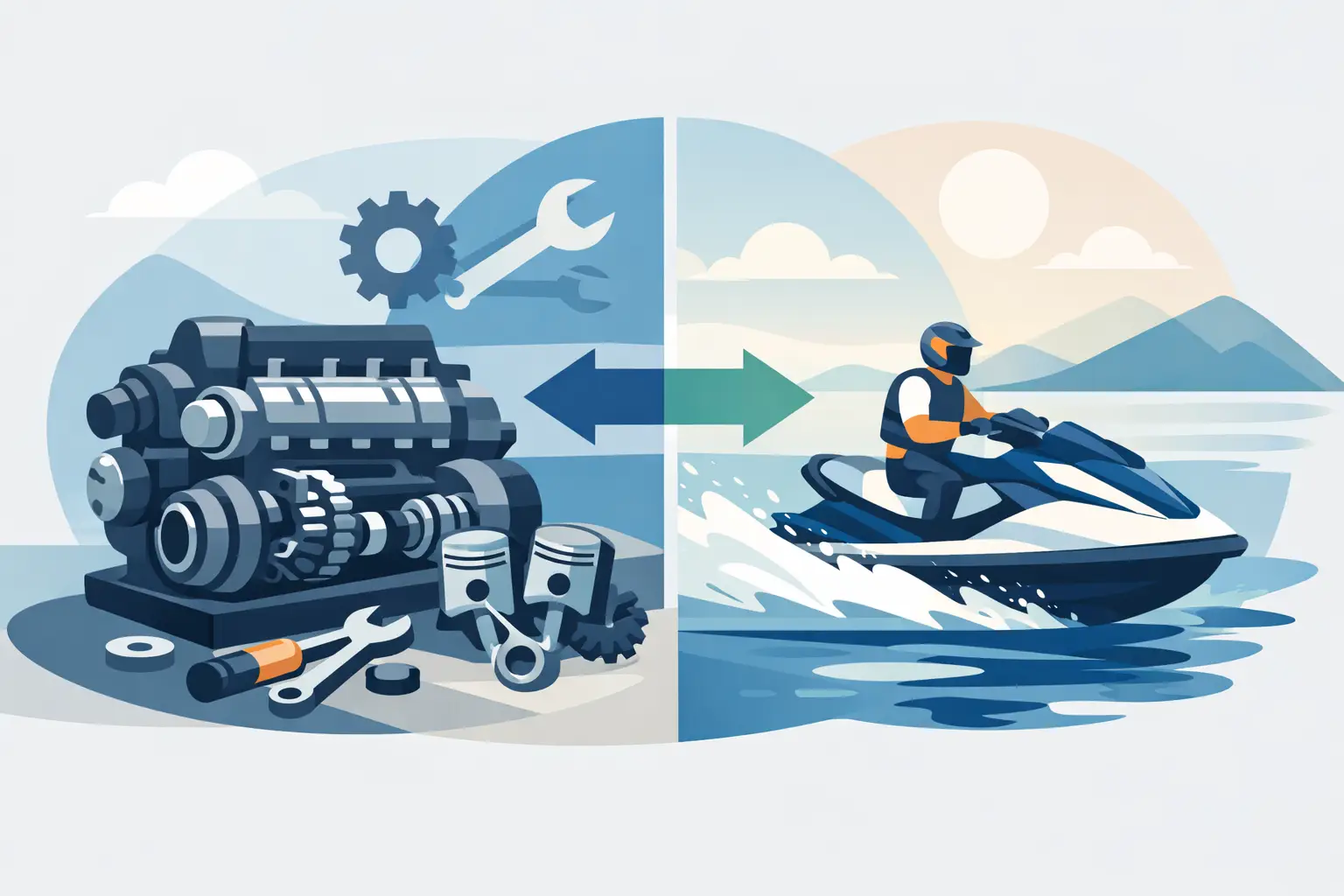
A JetSki engine rebuild is rarely a decision made because an owner feels like spending a weekend in the workshop. It usually starts with a hard-starting ski, lower compression, unexplained oil use, metal in the filter, overheating, or power that simply is not where it used to be. For a high-output Sea-Doo, Yamaha or Kawasaki, ignoring those signs can turn a repairable engine into a far more expensive failure.
The right rebuild is not just a collection of new parts. It is a measured diagnosis, a clear plan for how the ski will be ridden, and precision assembly that supports reliable power. Whether the goal is dependable summer riding, stronger throttle response or a race-focused package, the engine needs to be built around the application.
Start With Diagnosis, Not Parts
A damaged piston or low compression result does not automatically mean every component in the engine needs replacing. Equally, fitting a new top end without finding the cause of the damage is false economy. A lean air-fuel ratio, cooling restriction, detonation, supercharger issue, injector fault or poor calibration can damage fresh parts just as quickly as old ones.
A proper assessment starts with compression and leak-down testing, then looks further. Oil condition, filter debris, spark plug readings, cooling-system operation and fault codes all tell part of the story. On supercharged platforms, supercharger condition and boost behaviour also matter. If a ski has been tuned or modified, the existing ECU calibration, fuel system capacity and intake setup must be checked before the rebuild specification is chosen.
This is where specialist knowledge pays for itself. A workshop should be able to tell you whether the issue is isolated to the top end, whether the crankshaft and bottom end need attention, or whether a complete engine build is the sensible path. Guesswork has no place in a performance PWC engine.
When a JetSki Engine Rebuild Makes Sense
Rebuilding makes strong financial and practical sense when the hull, pump, electronics and running gear are in good condition, and the engine has a known, repairable fault. It is often the better option for an owner who knows their ski’s history and wants it returned to a specific reliability or performance standard.
A rebuild is particularly worthwhile when compression is uneven between cylinders, piston or ring damage is confirmed, bearing noise is present, or contamination has been caught before it has destroyed the entire assembly. It is also a logical time to upgrade known weak points on an engine that will be ridden harder than stock.
There are cases where replacement may be the better answer. Severe block damage, a broken crankcase, prolonged saltwater ingestion or an engine that has failed catastrophically can push labour and machining costs beyond the value of the platform. The answer depends on parts availability, the model, the condition of supporting systems and what you expect from the ski once it is back on the water.
For late-model performance machines, a carefully specified rebuild can be a better long-term investment than fitting an unknown used engine. A used motor may be cheaper upfront, but it can bring the same wear, poor maintenance history or hidden tuning problems that caused the original engine to fail.
What a Proper Rebuild Should Include
The scope should follow the diagnosis, not a generic parts package. A top-end rebuild may include pistons, rings, wrist pins, circlips, gaskets and cylinder inspection or machining. A full rebuild goes deeper, inspecting or replacing bearings, crankshaft components, timing hardware, seals and other wear items as required.
Clearances are critical. Cylinder bore condition, piston-to-wall clearance, ring end gap, crankshaft tolerances and valvetrain condition all need to suit the engine and intended output. Performance parts are not automatically an upgrade if they are mismatched to the tune, fuel quality or operating temperature. The best engine builds use quality components selected as a system.
Supporting hardware deserves equal attention. Fresh internals will not compensate for a blocked intercooler, weak fuel pump, dirty injectors, damaged oil lines or a cooling system full of corrosion. On modified supercharged skis, the combination of boost, camshaft profile, injector capacity, intercooling and ECU tuning needs to be matched. More boost without the fuel and calibration to support it is a fast route back to the workshop.
Assembly standards matter as much as parts selection. Cleanliness, correct torque procedures, accurate timing and careful pre-start checks are non-negotiable. Once the engine is running, a run-in process and final calibration check give the rebuild its best chance of a long service life.
Stock Reliability or a Performance Build?
This is the question to answer before ordering parts. A recreational owner who wants reliable towing, cruising and weekend riding may be best served by an OE-style rebuild with sensible durability upgrades. It should start easily, idle cleanly, run on the fuel available locally and handle long days on the water without drama.
An enthusiast chasing stronger acceleration or top-end performance has different priorities. Forged pistons, rods, upgraded valvetrain components, camshafts, improved intercooling and a revised ECU tune may be appropriate, but each change affects the rest of the package. Higher output usually increases heat, cylinder pressure and the need for regular inspection.
Race-oriented builds sit further along again. They can deliver serious results, but they often demand more frequent servicing, careful fuel management and a rider who understands that maximum power carries a maintenance commitment. There is no single best specification. The right one is the build that matches your riding, budget and tolerance for maintenance.
Common Mistakes That Shorten Engine Life
The most costly rebuild mistakes often happen after the engine is fitted. Running an aggressive tune on poor fuel, skipping the run-in procedure or assuming a warning light can wait until next weekend can undo excellent work. So can fitting performance parts without validating the calibration.
Saltwater riders need to be especially disciplined. Flush the cooling system correctly after use, inspect for corrosion and do not leave a ski sitting with contaminated oil or water where it should not be. Water ingestion is not always obvious, and a quick response can be the difference between replacing a few components and rebuilding the entire engine.
Maintenance intervals should also reflect how the ski is used. A stock machine used gently on occasional rides has very different needs from a tuned supercharged craft ridden hard in summer heat. Oil, filters, spark plugs, supercharger servicing and diagnostic checks are protection, not optional extras.
Choosing the Right Workshop for the Job
Ask direct questions before committing. What caused the failure? What measurements support the recommended work? Which parts are being replaced, and why? Will the fuel system, cooling system and tune be checked before the rebuilt engine is loaded up?
You should also receive a realistic discussion about cost and turnaround. Parts availability, machining requirements and the extent of internal damage can affect both. A professional workshop will not promise a fixed outcome before the engine is inspected, but it should communicate clearly once the scope is known.
For Central Coast owners, VTECHTUNED JETSKI PERFORMANCE brings diagnostics, engine building, ECU calibration and ongoing servicing together, so the engine is not treated as an isolated component. That matters when the goal is measurable performance without sacrificing the reliability needed to enjoy the ski.
A rebuild should leave you with more than a running engine. It should give you confidence to use the throttle, knowing the cause of the failure has been addressed and the package has been built for the way you actually ride.



