
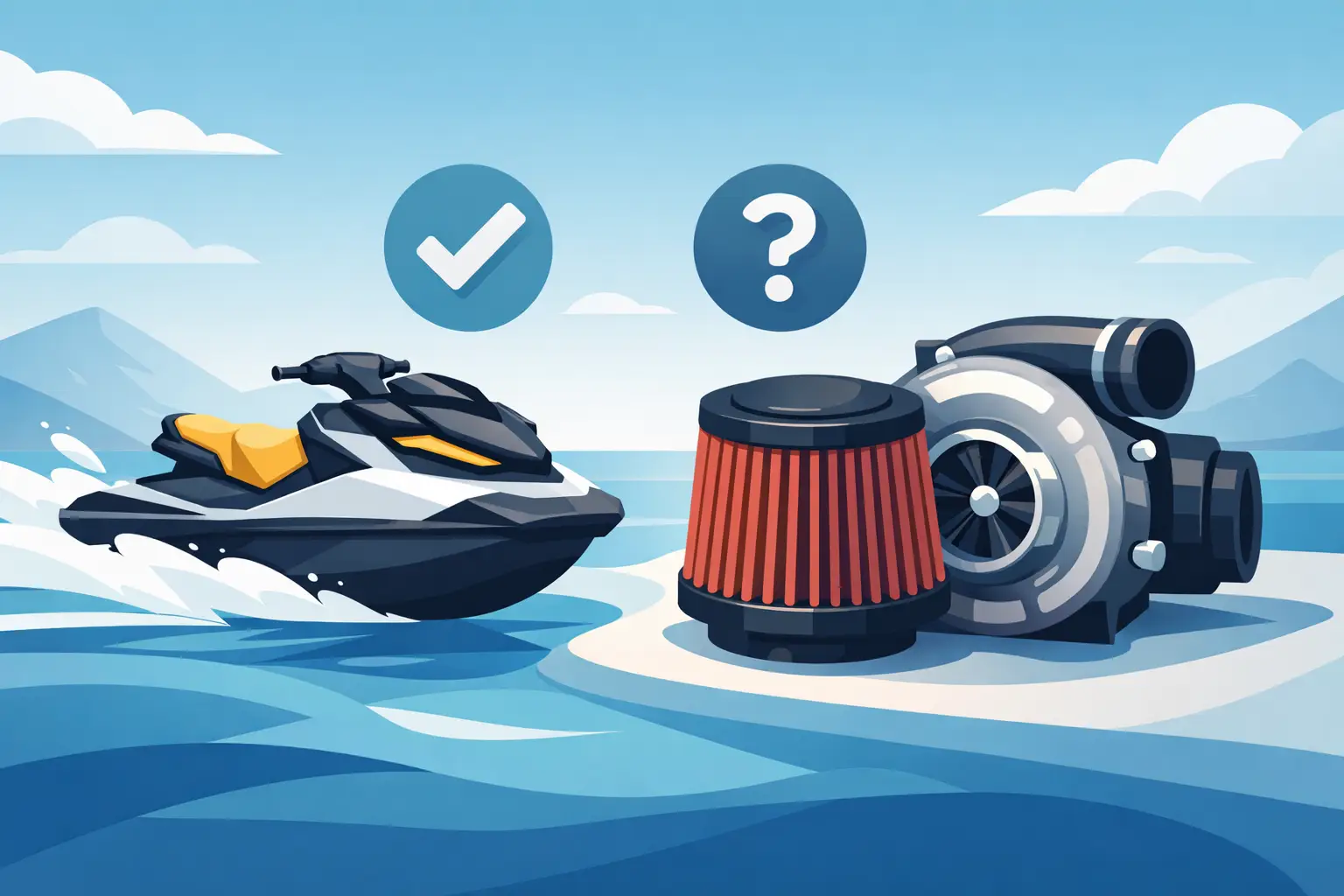
The Sea-Doo 325 power filter kit is one of the first upgrades riders look at when they want sharper response from the new 325 hp platform. It makes sense: the Rotax 1630 ACE engine is force-fed, heavily electronic and built with serious performance potential. But fitting a freer-flowing intake is not a shortcut to a properly sorted ski. The result comes down to the kit design, the rest of the hardware, ECU calibration and, critically, how the ski is used on the water.
For a recreational owner, it can be a worthwhile step towards a more responsive and engaging machine. For a rider chasing consistent acceleration, higher boost targets or race-build power, it is usually part of a larger intake, cooling and tuning package. The right question is not simply whether a filter kit adds power. It is whether it supports the power level and reliability you want from your Sea-Doo.
What a Sea-Doo 325 Power Filter Kit Changes
The factory airbox is designed to do several jobs at once. It controls intake noise, shields the filter from moisture and spray, manages packaging inside a tight engine bay and gives Sea-Doo a consistent airflow path for a stock calibration. That is a sensible compromise for a standard craft operating in mixed conditions.
A purpose-built power filter kit generally reduces restriction between the engine bay and supercharger inlet. Depending on the kit, that may involve a higher-flow filter element, revised intake ducting, a larger inlet path or removal of restrictive factory sections. Less restriction allows the supercharger to draw air more easily, particularly as engine demand rises through the rev range.
The change a rider notices first is often throttle response rather than a dramatic top-speed number. The engine can feel crisper when rolling back onto the throttle, and acceleration can feel more urgent under load. Intake noise also becomes more pronounced. Some owners love the deeper supercharger and induction sound. Others prefer the quieter, more protected nature of the factory airbox.
That trade-off matters. A power filter kit is not just an airflow part. It changes the intake environment inside a personal watercraft, where heat, vibration and water exposure are all part of normal operation.
Where the Performance Gain Comes From
On a standard Sea-Doo 325, the factory ECU, exhaust system, intercooler arrangement and supercharger setup still set the overall ceiling. A filter kit can reduce one restriction, but it cannot override the limits of the remaining system. Expect the benefit to be more meaningful when the ski already has, or is planned to receive, complementary performance hardware and an appropriate tune.
An ECU calibration is especially relevant. The engine management strategy controls fuel delivery, ignition timing, throttle behaviour, boost-related safeguards and other operating parameters. When airflow characteristics change, a correct tune helps ensure the engine makes use of that change safely. It also prevents the common mistake of bolting on parts until a ski feels faster while ignoring air-fuel control, knock protection and thermal load.
On modified applications, a high-flow intake can support the airflow demand created by increased boost, freer-flowing exhaust components and intercooler upgrades. This is where the kit becomes less of a standalone accessory and more of a supporting part in a properly engineered package. The aim is not peak dyno talk alone. It is repeatable response out of the hole, strong mid-range pull and a ski that still performs after several hard runs.
Water conditions affect the result too. A light rider on smooth water may feel a response improvement immediately. A heavily loaded fish-pro, a jet boat conversion or a ski ridden in rough chop may reveal different priorities, including intake protection, belt condition, charge-air temperatures and pump setup. More engine output is only useful when the hull and pump can turn it into forward motion.
Choosing the Right Sea-Doo 325 Power Filter Kit
Fitment is the first non-negotiable. Sea-Doo 325 models share a modern 1630 ACE foundation, but model-year changes, hull layouts and accessory packaging can affect what fits cleanly. Buy a kit specifically confirmed for the exact model and year of your craft, not a universal filter that happens to look close enough.
The filter location deserves just as much attention as filter size. An open element placed in a hot, poorly ventilated engine bay may flow well on paper but draw warmer air. A design that maintains a sensible path to cooler air while protecting the filter from direct spray is usually the better solution for real-world PWC use. The marine environment is unforgiving of shortcuts.
Look at the full kit quality as well. Secure mounting, vibration resistance, properly sized hose connections and a serviceable filter all matter. A loose clamp or poorly supported intake tube can create an air leak, rub through against surrounding components or come adrift during hard riding. These are avoidable failures, but only if the parts and installation standard are right.
Filter media is another practical consideration. Reusable performance filters need cleaning and re-oiling at the correct intervals and with the correct products. Over-oiling can contaminate sensors or restrict airflow, while an under-serviced filter can allow dirt into an engine that is already working hard. Saltwater riders should inspect the intake system more often than freshwater-only owners, especially after rough-water sessions.
Installation Is Where Reliability Is Won or Lost
A tidy intake install should look simple when it is finished, but the details matter. Every clamp needs to be correctly seated and tightened. Hoses must be routed clear of hot surfaces, moving components and sharp edges. The filter needs adequate clearance, and the engine cover must refit without crushing or loading the new parts.
Before the ski goes back on the water, inspect the complete intake tract for gaps or loose connections. An unmetered air leak can cause poor running, fault codes or inconsistent throttle response. Once installed, the craft should be water-tested properly rather than judged from a brief rev in the driveway. A PWC operates under real load only on the water.
Match airflow upgrades to the calibration
If the Sea-Doo is receiving a tune, give the tuner an accurate list of every fitted part. That includes the filter kit, exhaust changes, intercooler upgrades, supercharger work and fuel-system components. Good tuning is based on the actual configuration, not assumptions. Changing hardware after a calibration without checking compatibility is how well-intentioned upgrades become expensive repairs.
For owners in NSW who want the intake fitted, checked and tuned as a complete package, VTECHTUNED can assess the ski rather than treating each part as an isolated sale. That approach is valuable on a 325 platform, where performance changes happen quickly and the margin for poor workmanship gets smaller as power rises.
Do not ignore water and heat management
The stock airbox has a protection advantage in wet conditions. If you regularly ride offshore, launch through wash, tow riders, run in rough chop or spend long days in saltwater spray, intake protection should carry real weight in your decision. A more exposed filter may suit controlled performance riding, but it needs to be the right design and maintained accordingly.
Heat is the other consideration. High-performance supercharged engines generate it quickly. A filter kit can help the engine breathe, but it does not solve elevated intake-air temperatures or cooling limitations. Riders pursuing higher output should consider the full system: intercooling, cooling flow, exhaust configuration, fuel quality, belt health and ECU strategy.
When Keeping the Factory Airbox Makes Sense
There is no shame in retaining the original intake. For an owner who values quiet operation, factory-style protection and straightforward servicing, the stock airbox may be the best choice. This is particularly true for a near-standard ski used for family rides, long-distance cruising or rough-water recreation.
The factory system can also be preferable where warranty concerns, frequent wet use or minimal maintenance are priorities. The goal is to match the part to the job, not fit hardware because it is popular online. A well-maintained stock 325 is already an exceptionally quick craft.
A power filter kit earns its place when it is chosen for a clear reason: improving response, supporting a planned tune or building a more capable high-performance package. It should not be expected to transform a standard ski on its own.
Before ordering, confirm exact fitment, decide whether the ski needs ECU calibration, and be honest about where and how it is ridden. A cleanly installed Sea-Doo 325 power filter kit matched to the right supporting setup gives you a sharper, more purposeful machine without sacrificing the reliability that makes time on the water worthwhile.



