
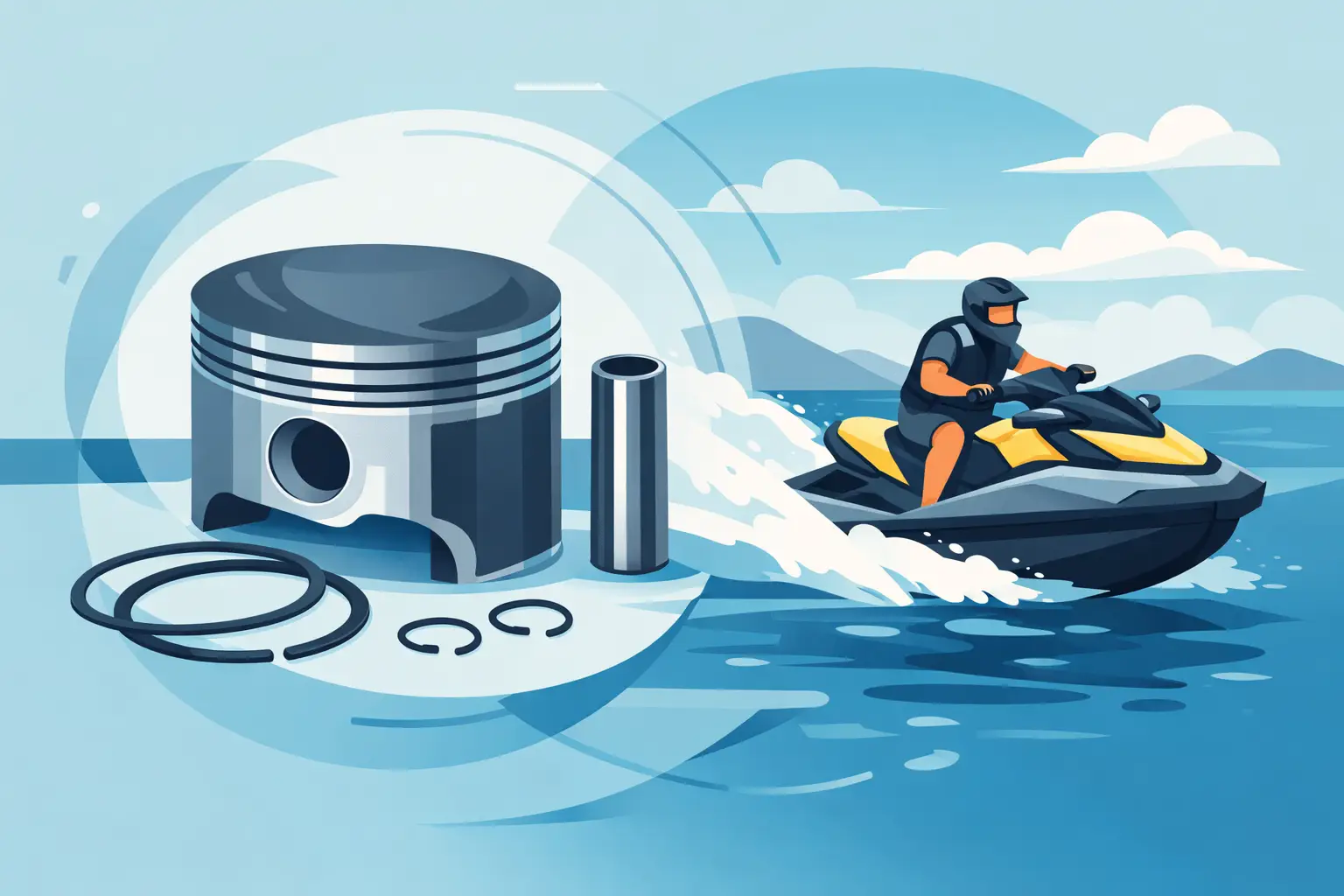
A Wossner Sea-Doo 300 piston kit is not a cosmetic upgrade or a quick fix for a tired engine. It is a serious internal component for riders building a stronger Sea-Doo 300 platform, recovering from piston damage, or preparing an engine for more boost, heat and cylinder pressure than a stock rebuild is designed to handle.
For the right build, a forged piston kit can be a smart investment in reliability and performance. For the wrong build, it can become an expensive way to cover up the real fault. The difference comes down to diagnosis, machining accuracy, supporting parts and the tune loaded into the ECU.
When a Wossner Sea-Doo 300 piston kit makes sense
Sea-Doo 300 engines produce serious power from the factory. Once the machine is ridden hard, tuned, fitted with a supercharger upgrade or used in long high-load sessions, the pistons are exposed to considerably more heat and combustion pressure. That is where a quality forged piston becomes relevant.
A Wossner kit is commonly considered during a performance engine build, particularly where the owner wants more safety margin than a standard replacement piston can offer. Forged pistons are made to cope with demanding conditions, but they are not magic. Their value lies in using them as part of a properly planned combination.
It can be the right move if the engine is already apart for a rebuild after a confirmed mechanical issue, if cylinder measurements call for an oversize piston, or if the ski is heading towards a higher-output package. It also makes sense for riders who want a build designed around sustained hard use rather than occasional short bursts of throttle.
The kit alone will not cure a damaged cylinder, a lean air-fuel ratio, poor fuel supply, detonation, an over-rev condition or an intercooler issue. If one of those problems caused the original failure, installing new pistons without addressing it simply gives the fault another chance to damage the engine.
What the piston kit changes in a Sea-Doo 300 build
The Sea-Doo 300 ACE platform is supercharged, compact and highly responsive to modifications. That makes it an excellent performance engine, but also one where clearances and calibration matter. More boost is not just more power. It means more cylinder pressure, more heat and less room for shortcuts.
A Wossner forged piston is built for the demands of a performance application. In practical terms, it gives an engine builder a high-quality foundation when setting up an engine for a specific bore size, power target and intended use. The piston, rings, gudgeon pin and clips must be checked against the exact kit contents and engine specification before assembly. Never assume every piston kit includes the same components or is correct for every model year.
A forged piston may also require different clearance considerations compared with an original-style cast piston. Forged material can behave differently as engine temperature rises. That is why the correct piston-to-wall clearance is measured during the build, not guessed from an old bore measurement or copied from an unrelated forum post.
The goal is not simply to make the engine stronger. The goal is to build an engine that starts cleanly, warms up properly, holds compression, maintains oil control and survives the way the ski will actually be ridden.
Fitment is where the build is won or lost
Measure the cylinders, then choose the piston
A piston kit should follow the cylinder inspection, not lead it. The cylinders need to be measured for bore size, taper, out-of-round condition and surface damage. If there is scoring, aluminium transfer, corrosion or excessive wear, the correct repair may involve machining or replacement rather than fitting a standard-size piston and hoping for the best.
The piston size needs to suit the finished bore. That means the workshop must first establish what the cylinder is, what it can safely become and what clearance the piston manufacturer specifies for that application. The final hone finish also matters because it helps the new rings bed in and control oil correctly.
There is no reliable one-size-fits-all clearance figure for a modified Sea-Doo 300. Boost level, fuel quality, cooling condition, intended RPM and piston design all influence the build. A recreational ski on a conservative tune is not treated exactly the same as a race-focused machine that spends much of its life at wide-open throttle.
Ring gap deserves the same attention
Ring end gap is one of the most critical measurements in a boosted engine. As cylinder temperature rises, the rings expand. If the gap is too tight, the ring ends can butt together, load the piston and cylinder wall, and cause rapid damage. Too much gap can compromise sealing and increase blow-by.
Ring gaps should be set to the piston supplier’s specifications and the intended power level, then checked carefully in each cylinder. This is precision work. It is not a place for a universal number, a rushed file job or an assumption that pre-fitted rings are automatically ready for every engine.
Check the complete rotating assembly
A piston failure can send debris through the engine, oil system and supercharger system. During a proper rebuild, inspect the rods, crankshaft, bearings, cylinder head, valves, timing components and oiling system. Flush or replace contaminated parts as required.
Also inspect the intake tract and intercooler plumbing. Any foreign material left behind from a previous failure can be drawn back into the engine. A clean build area and disciplined assembly process are as valuable as the parts themselves.
The Wossner Sea-Doo 300 piston kit needs the right supporting package
Pistons sit at the centre of the combustion process, so the rest of the package has to support them. On a modified 300, that often includes fuel system capacity, supercharger condition, intercooling, intake sealing, exhaust configuration and ECU calibration.
The tune deserves particular attention. A high-performance piston cannot protect an engine from excessive ignition timing, a lean mixture, poor-quality fuel or uncontrolled boost. ECU tuning must match the fuel being used in Australia, the fitted hardware and the rider’s actual operating conditions. A ski used on hot Central Coast summer days, carrying passengers or towing, may need a different safety margin to a lightweight race setup.
Cooling system condition is equally relevant. Blocked passages, air leaks, damaged hoses or a weak cooling flow can raise combustion temperatures and place the whole engine under stress. Before blaming the piston, verify the basic health of the machine.
For higher-output builds, it is also sensible to review the driveline and pump setup. More engine power can expose clutch, supercharger, driveline or impeller limitations that were not obvious at stock power. A well-matched package feels faster because it delivers power cleanly, rather than simply producing a big dyno figure.
Street reliability versus race-build clearance
There is always a trade-off in a forged-piston build. A machine built for extreme output and sustained racing use may have different clearances, ring-gap settings and service intervals to a recreational Sea-Doo that needs to start easily at the ramp and run reliably all weekend.
For a fast recreational ski, the best result is usually a balanced build. Use quality internals, conservative fuel and tuning strategies, correct cooling, and a maintenance plan that suits the hours the machine sees. Chasing the last few horsepower while ignoring service history is rarely good value.
For dedicated competition or high-boost use, the priorities can change. The engine may be built with more allowance for heat and load, but it will demand closer monitoring. Compression checks, oil inspections, supercharger servicing and regular data review become part of owning that level of performance.
Neither approach is wrong. The right one depends on whether the ski is used for social riding, offshore work, closed-course racing or a jet boat application. Be honest about the intended use before selecting parts.
When a piston kit is not the first answer
If a Sea-Doo 300 has low compression, poor throttle response, smoke, a warning light or unusual noise, do not order pistons before it has been diagnosed. The issue could be in the supercharger, valves, timing system, fuel delivery, sensors, cooling system or crankcase.
A leak-down test, compression test, scan data review and physical inspection provide a far better starting point. If the engine does need internals, that information helps determine whether a Wossner kit, cylinder work and further components are genuinely required.
At VTECHTUNED, the best engine builds start with the failure cause and the customer’s power goal, then the parts list follows. That prevents money being spent twice and gives the finished ski a much better chance of staying fast and reliable.
A quality piston kit earns its place when it is measured, machined, assembled and tuned as part of one complete plan. Build the Sea-Doo 300 around how you ride it, and the result will be power you can use with confidence.



