
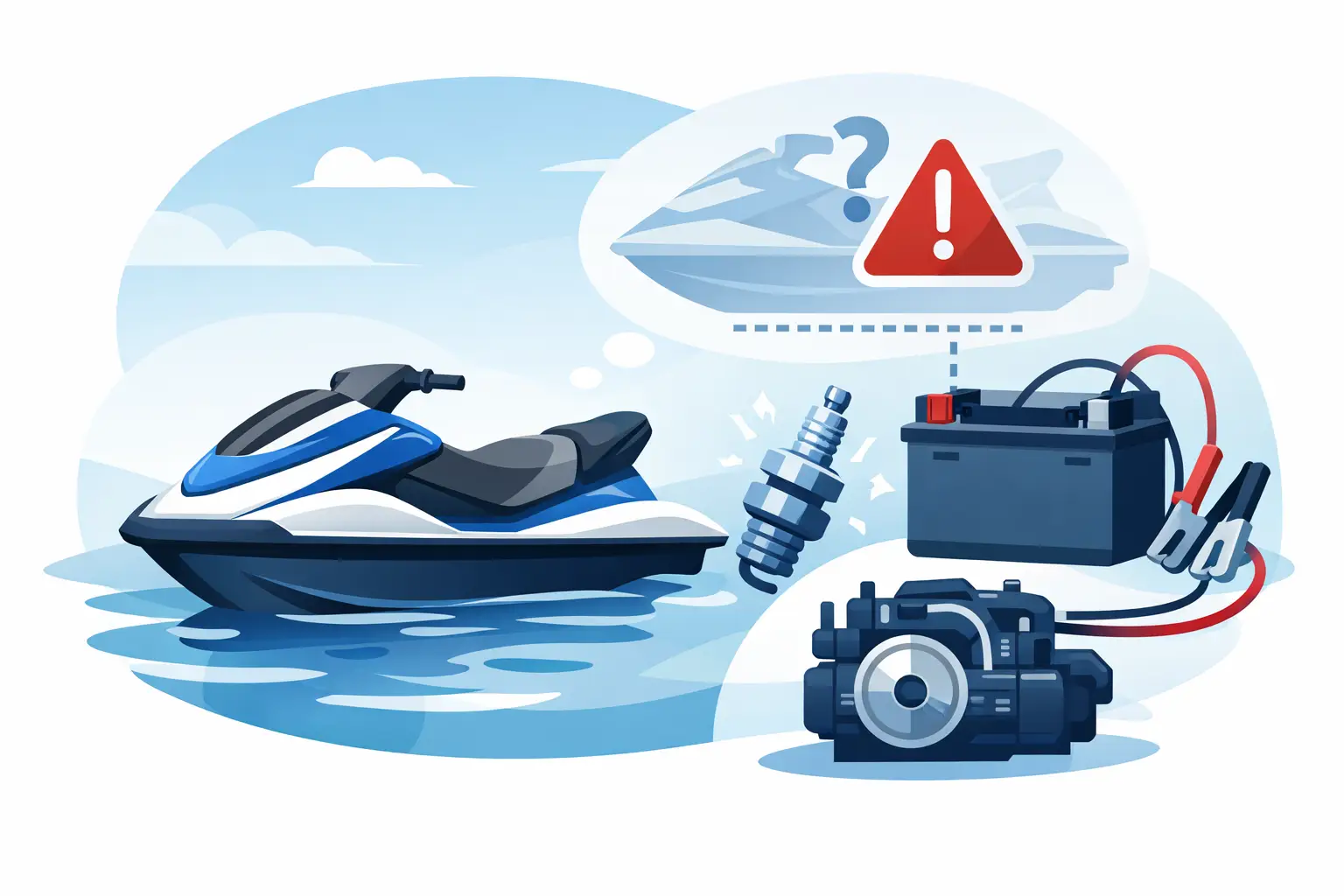
A JetSki that will not start at the ramp is more than an inconvenience. JetSki starting problems can turn a planned ride into a missed weekend, and repeatedly pressing the start button can make an underlying fault worse. The fastest repair comes from identifying exactly what the ski does when you try to start it, then testing the right system rather than replacing parts on a guess.
A no-start issue is not always an engine issue. On modern Sea-Doo, Yamaha and Kawasaki platforms, the starting sequence depends on battery voltage, lanyard or key recognition, safety interlocks, ECU communication, fuel delivery, ignition and mechanical condition. Performance modifications add another layer: an upgraded ECU calibration, injectors, supercharger setup or fuel system must all work as one package.
Separate JetSki Starting Problems by Symptom
The key question is simple: does the engine crank? A ski with no dash, no beep and no response has a different fault path to one that cranks strongly but will not fire. Start by observing the symptoms before pulling panels apart.
If the display is dead or intermittent, look first at battery condition, terminal connections, main fuses and the power supply to the electrical system. A lanyard that is not recognised, a damaged key post or a poor connector can also stop the starting sequence before the starter circuit is even commanded.
A single click when the start button is pressed commonly points to voltage drop, a weak battery, corroded cable connection, starter relay or starter motor issue. It does not automatically mean the starter motor has failed. A battery can show acceptable voltage at rest, then collapse under starter load. That is why load testing matters more than looking at a voltage reading alone.
If the engine cranks at normal speed but does not start, the focus shifts to fuel, spark, sensor inputs, ECU fault codes and compression. If it starts and immediately dies, suspect key recognition, fuel pressure, air leaks, throttle-body contamination, sensor signals or a developing mechanical problem. The way the fault presents saves diagnostic time.
Start With the Battery and Main Connections
PWC batteries work hard. Heat, vibration, short ride cycles and storage periods are hard on them, especially when a high-compression or supercharged engine demands serious current from the starter. A battery that was fine last month can be marginal after sitting for a few weeks.
Inspect both terminals closely. They should be clean, tight and free from white or green corrosion. Check the earth cable where it attaches to the engine as well as the positive lead at the starter relay. A connection can look acceptable from above while corrosion is hiding inside the cable lug.
A fully charged conventional 12-volt battery may read around 12.6 volts at rest, but that figure alone does not prove it is serviceable. Watch the voltage while cranking. A sharp drop can prevent the ECU, injectors and ignition system from operating correctly even if the starter still turns. Lithium batteries require compatible charging equipment and should not be treated like a standard lead-acid battery.
Do not jump-start a PWC with a running car or a high-output charger connected. Voltage spikes can damage sensitive electronic components. If external assistance is required, use a suitable 12-volt battery source with the vehicle engine switched off, then address why the ski battery was flat in the first place.
Safety Circuits Are Not Optional
Modern skis will not start unless their safety requirements are met. Make sure the lanyard is properly fitted, the key is recognised and the start-stop controls are functioning as intended. On models with electronic security systems, a faulty key, key post, wiring issue or communication fault can look exactly like a dead battery or failed starter.
Check fuses with a meter, not just by eye. A fuse can appear intact but fail to pass current under load due to corrosion in the fuse holder or damaged terminals. Also inspect accessible connectors for water ingress, bent pins and signs of overheating. Saltwater use makes this work particularly worthwhile, even on a well-maintained ski.
When It Cranks But Will Not Fire
Once cranking speed is healthy, avoid the temptation to keep trying until the battery is flat. Long crank cycles can flood an engine, overheat wiring and hide the original symptom. Use short attempts, then diagnose what is missing.
Fuel is a common culprit after storage. Petrol degrades, and ethanol-blended fuel can attract moisture. Water contamination, stale fuel, blocked filters or weak fuel pressure can leave an engine cranking normally without starting. A strong fuel smell does not confirm that fuel pressure, injector pulse and spray pattern are correct.
Spark faults can come from worn plugs, failing coils, damaged wiring, poor earths or ECU inputs that prevent ignition command. Spark plugs on a high-performance PWC are not a fit-and-forget item. Plug condition can reveal rich running, oil contamination, detonation risk or water intrusion, but reading them accurately requires context. Replacing plugs may get a tired recreational ski running, yet it will not solve a fuelling, calibration or compression issue.
Avoid using starting fluid as a shortcut, particularly on supercharged or modified engines. It can create a harsh combustion event and masks the fault rather than fixing it. A proper diagnosis checks fuel pressure, injector operation, spark quality and live sensor data in the correct order.
Mechanical Faults Need a Different Response
An engine that turns unusually slowly, stops abruptly or will not rotate should not be forced. Water ingestion, internal corrosion, a seized accessory or a mechanical failure can all create this symptom. Continuing to crank a hydrolocked engine can bend connecting rods and turn a repairable problem into a full engine build.
Water in the hull also deserves immediate attention. It may be linked to a leaking hose, exhaust issue, carbon seal concern, hull damage or failed fitting. Electrical components and connectors sitting in bilge water can create faults that appear days later. Find and repair the source, dry the affected area correctly, and assess the engine before attempting repeated starts.
Compression and leak-down testing are valuable when a ski has low power, hard starting, unusual cranking sounds or a no-start condition after overheating. On modified engines, the correct result depends on the engine combination, camshafts, compression ratio and tune. Numbers without platform knowledge can lead to the wrong conclusion.
Modified Skis Need Calibration Checks
A performance build has tighter dependencies than a stock ski. Larger injectors, upgraded intercoolers, supercharger changes, camshafts and fuel-system modifications require a calibration designed for that exact setup. A tune that is close is not necessarily safe or reliable.
If a no-start issue began after fitting parts, changing fuel type, updating a tune or reconnecting the battery after a long period, treat the modification history as diagnostic evidence. Confirm the ECU file, injector data, sensor readings and fuel-pressure setup before blaming a mechanical component. Do not swap in random second-hand electronics or load an unknown file simply to see if it starts.
This is where a specialist workshop earns its keep. VTECHTUNED approaches difficult starting faults with brand-specific diagnostics and mechanical testing, then checks the complete engine and tuning package rather than selling a guess. That approach protects both reliability and the performance you paid for.
Checks Worth Doing Before You Book It In
Before arranging repairs, record whether the ski has power at the dash, whether it beeps or recognises the key, whether the starter clicks or cranks, and whether the engine attempted to fire. Note when it was last ridden, whether it has been stored with fuel in it, and any recent servicing, upgrades or water-ingestion event.
Charge the battery correctly, inspect terminal tightness, check the obvious fuses and make sure the lanyard is seated. Beyond that point, avoid stripping the ski or bypassing safety systems unless you understand the platform. Modern PWC electrical faults can be quick to repair when the original condition is preserved, but much slower when wiring has been altered or components have been swapped without testing.
Do not run the ski dry on a trailer unless you are following the manufacturer-approved flushing procedure for that model. Never diagnose a fuel or electrical issue in an enclosed garage, and keep ignition sources away from the engine bay when fuel vapour may be present.
A reliable ski should start with confidence, not hope. Pay attention to the first symptom, stop before repeated cranking causes damage, and give the diagnosis the same precision you expect from the rest of your machine.



