
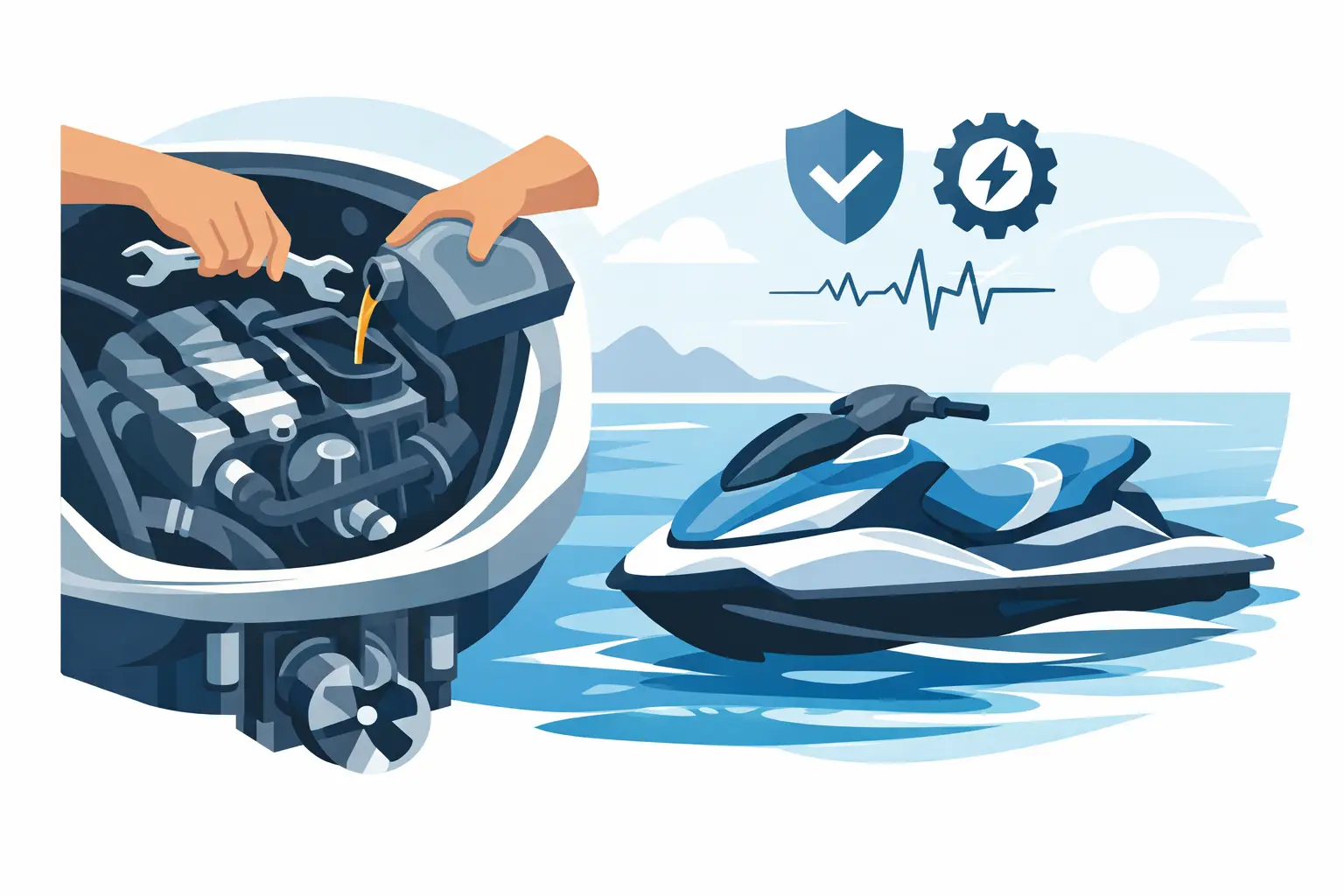
A flat-out run that suddenly feels soft, a supercharger that sounds different, or a warning light that appears after a big weekend on the water is rarely a problem that started that day. JetSki servicing is where those small changes are found before they become a ruined ride, a missed race weekend or a major engine bill.
For a stock recreational PWC, regular maintenance protects reliable weekends on the water. For a tuned, supercharged or race-focused machine, servicing is part of the performance package. More boost, higher RPM and sharper ECU calibration can produce serious gains, but they also leave less room for neglected oil, tired spark plugs, contaminated fuel or a cooling fault.
JetSki Servicing Is More Than an Oil Change
A proper service should be based on the machine, its hours, its use and its modifications. A Sea-Doo used in saltwater every fortnight has different needs to a freshwater Yamaha ridden occasionally, while a modified Kawasaki running upgraded internals needs an even closer eye on its condition.
Oil and filter replacement remain fundamental. Marine engines work hard under load and are exposed to moisture, heat cycles and, in many cases, salt. Fresh oil is cheap insurance for bearings, valvetrain components and supercharger systems. But stopping at an oil change overlooks the areas that can cause the most expensive failures.
A specialist inspection looks at the full operating system: engine, driveline, cooling, fuel delivery, electrical connections and hull. That means checking for leaks, loose fasteners, damaged hoses, corrosion, water intrusion and signs that the machine is not operating as intended. Diagnostic scanning is equally valuable on modern PWCs. Fault codes, sensor readings and engine data can point to an issue well before it becomes obvious from the handlebars.
For performance machines, servicing also provides a baseline. Compression results, plug condition, boost behaviour, fuel pressure and engine data help identify changes over time. The goal is not to chase numbers for their own sake. It is to keep power delivery consistent and detect a mechanical issue before it damages a piston, valve, bearing or supercharger.
What a Specialist Service Should Check
The exact work depends on the manufacturer schedule and the PWC’s condition, but a thorough workshop service generally covers several critical areas.
Engine and lubrication
The oil and filter are replaced at the correct specification, then the engine is checked for leaks and abnormal noise. Spark plugs are inspected or replaced where required. Their condition can reveal a lot about combustion, fuelling and engine health, particularly on modified or forced-induction engines.
A compression or leak-down test may be recommended if there are starting issues, power loss, excessive smoke, unusual plug readings or a history of hard use. These tests are not a substitute for proper diagnostics, but they are powerful tools for assessing the health of the engine internals.
Cooling, exhaust and water control
PWCs rely on water flow to manage engine and exhaust temperature. Blocked cooling passages, damaged hoses, worn clamps or debris in the system can quickly create a serious issue. Saltwater riders need to be especially vigilant. Flushing after every ride helps, but it does not remove the need for inspection.
A workshop should check cooling hoses, fittings and the exhaust system for leaks and corrosion. Overheating alarms deserve immediate attention, even if they disappear after the machine cools down. Continuing to ride while assuming it was only a sensor can turn a manageable repair into engine damage.
Fuel, air and electrical systems
Fuel quality matters more than many riders realise. Stale fuel, water contamination and restricted filters can cause poor throttle response, lean running and injector issues. On a tuned PWC, inconsistent fuel supply can undo the safety margin built into an ECU calibration.
The intake tract, air filter, battery, charging system and wiring connections also need attention. Corroded terminals and poor earth connections can create intermittent faults that are difficult to trace once the machine is back in the water. A quality service addresses these details before they leave you stranded at the ramp.
Driveline, pump and hull
The jet pump is where engine power becomes forward movement. Wear rings, impellers, bearings and seals all affect acceleration, top speed and cavitation. If your PWC revs hard but feels slow out of the hole, slips in turns or suddenly loses drive, the pump deserves inspection.
The hull and ride plate should not be treated as cosmetic extras. Damage around the intake grate, pump shoe or hull can affect handling and water flow. Fibreglass cracks, impact damage and loose hardware should be assessed early, particularly after a strike with debris, a trailer incident or an awkward beach launch.
Service Intervals Depend on How You Ride
Manufacturer schedules are the starting point, not the finish line. Hours matter, but the way those hours were accumulated matters just as much. A PWC ridden gently in freshwater can often follow a standard schedule. A machine used in saltwater, frequently launched from the beach, ridden at full throttle or fitted with performance hardware may need more frequent checks.
It is sensible to book a service before the season gets busy, after a long storage period and after any event that may have stressed the machine. That includes an overheat warning, an ingestion incident, a hard impact, contaminated fuel, a belt failure or a sudden change in power.
For heavily modified PWCs, service planning should be part of the build. ECU tuning, upgraded superchargers, larger injectors, intercoolers and internal engine work all need to operate as one system. The more power you ask for, the more valuable it becomes to have one specialist workshop responsible for fitting, calibration and ongoing checks.
The Warning Signs You Should Not Ignore
Do not wait for a complete breakdown if the PWC starts behaving differently. Hard starting, rough idle, weak acceleration, high RPM with poor drive, smoke, fuel smell, warning messages, overheating or new vibration all warrant investigation. So does a change in sound. Experienced riders often notice a different supercharger whine, exhaust note or pump noise before a fault becomes visible.
Four symptoms deserve particular urgency:
- Water in the hull, especially if the source is unknown.
- A persistent overheat warning or loss of cooling water flow.
- Metallic noise, severe vibration or a sudden drop in compression.
- A supercharged engine that has lost boost or developed an unfamiliar noise.
Switching the engine off and arranging an inspection can feel inconvenient, but it is usually the smarter call. Running a damaged pump bearing, overheated engine or water-contaminated oil risks multiplying the repair cost.
Why Performance PWCs Need Specialist Attention
General mechanical knowledge is useful, but high-performance PWC work has its own demands. Access is tight, marine corrosion is relentless and modern systems combine engine management, boost control, sensor feedback and specific manufacturer hardware. A workshop needs the right diagnostic tools, product knowledge and practical experience with Sea-Doo, Yamaha and Kawasaki platforms.
There is also a balance to strike between maximum output and dependable use. A race-oriented calibration may suit a specific fuel, intake setup and riding purpose, while a recreational performance build may prioritise stable temperatures, predictable throttle response and long-term reliability. The right answer depends on how the machine is actually used, not on a generic parts list.
At VTECHTUNED, that complete approach matters: diagnose the problem properly, use quality components, install them with precision and support the machine with ongoing maintenance. It gives owners one point of contact rather than separate suppliers, tuners and repairers each working from assumptions.
Get More From Every Service
You can make workshop servicing more effective by bringing clear information. Note the engine hours, when the issue occurs, any warning messages, recent fuel purchases and modifications already fitted. A short mobile video of an intermittent noise can be useful too. Those details help a technician reproduce the fault instead of guessing.
Between services, flush after saltwater use, keep the battery maintained, use fresh fuel suited to the tune and inspect the hull and pump after riding in shallow or debris-prone water. These are simple habits, not replacements for professional work, but they protect the investment between bookings.
Your PWC should feel sharp, pull cleanly and return to the trailer without a new rattle, warning light or question mark. If it does not, booking the right inspection early is the best way to protect the power you paid for and the reliability you expect.



