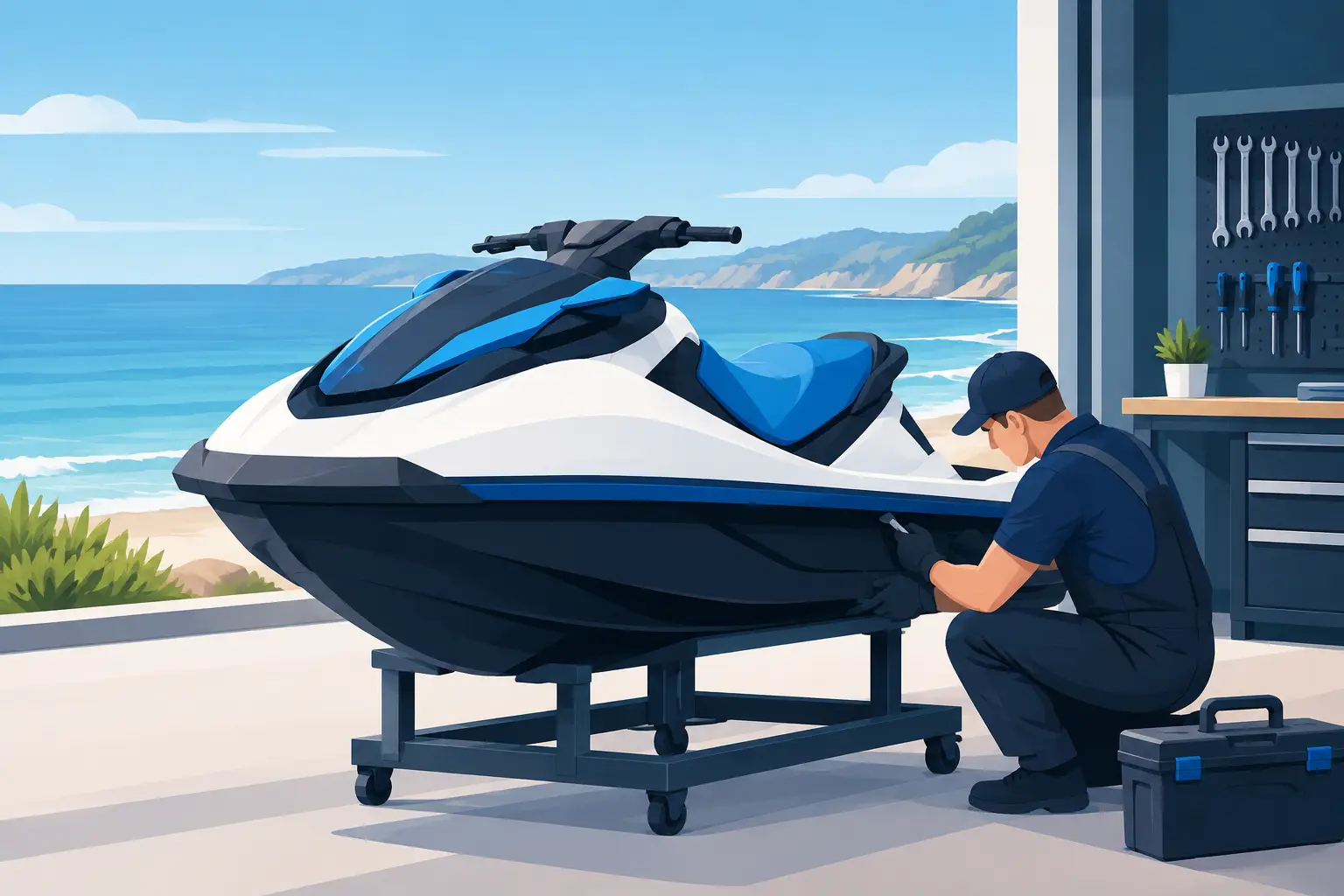
A collision can leave a PWC looking deceptively rideable. A cracked bumper, damaged sponson or split section of hull may be obvious, but the greater risk often sits behind the visible impact point: stressed fibreglass, shifted mounts, damaged steering hardware, water intrusion or driveline misalignment. Proper Central Coast PWC collision repairs are about returning the ski to safe, reliable operation – not simply making the damage less noticeable.
For Sea-Doo, Yamaha and Kawasaki owners, that distinction matters even more when the machine has performance modifications. More boost, sharper throttle response and hard riding put additional load through a hull, pump, mounts and steering system. A repair that is structurally weak, poorly aligned or not properly sealed can turn one impact into repeated mechanical problems.
Why a PWC collision needs more than a cosmetic fix
Personal watercraft hulls are built to flex in a controlled way. When a ski strikes a submerged object, another craft, a trailer or a jetty, that load can travel well beyond the chipped gelcoat or fractured panel. The hull can delaminate internally, mounting points can crack, and the engine bed or jet-pump area can be affected without immediately showing clear external signs.
This is why a quick filler-and-paint job is rarely the right answer. It may improve the appearance, but it does not confirm the fibreglass structure is sound or that water cannot enter the hull. On a supercharged ski, a small issue that allows water ingress or affects alignment can quickly become a costly one.
The repair approach depends on where and how the damage happened. A light scrape along a rub rail is different from a bow impact, while a rear collision near the ride plate, intake grate or pump shoe demands close attention to handling and driveline condition. There is no single repair method that suits every PWC.
Central Coast PWC collision repairs start with inspection
A serious repair begins before materials are mixed or panels are sanded. The PWC needs to be cleaned, assessed and inspected from the outside and inside. That includes checking the hull, deck, bumper, steering system, sponsons, intake grate, ride plate, pump area, engine mounts and accessible internal structure.
The goal is to identify both the primary damage and the secondary damage. For example, a side impact may crack the outer hull while also damaging a sponson mount or distorting the steering nozzle. A heavy strike underneath may mark the ride plate but also affect the pump shoe seal, intake area or the condition of the impeller and wear ring.
For insurance work, clear photos, documented findings and an itemised scope are essential. An accurate inspection report gives the owner and insurer a realistic picture of what is required. It also reduces the chance that a repair is approved for visible damage only while hidden structural issues are left unresolved.
What should be checked after an impact?
The exact inspection varies by model and impact, but four areas deserve particular attention. First is hull integrity: cracks, soft spots, separation between layers and signs of water entry must be investigated. Second is steering and handling hardware, including handlebars, cables, nozzle components and sponsons. Third is the jet-pump system, where damage can affect acceleration, top speed and cavitation. Finally, the engine bay should be checked for displaced mounts, damaged hoses, loose electrical connections and any sign that water has reached components that should remain dry.
A ski that starts and idles normally is not automatically cleared for use. Many collision-related faults only show under load, at speed or when the hull begins to flex in rough water.
Structural fibreglass repair is the foundation
Quality fibreglass work starts by removing compromised material, not covering it. Loose, cracked or delaminated sections need to be opened up until the repair reaches sound substrate. The area is then prepared, rebuilt with suitable fibreglass materials and resin, and allowed to cure correctly before final shaping and finishing.
The objective is strength, shape and watertight integrity. Repairing a hull section requires the correct laminate build-up and careful feathering into the surrounding structure. Too little reinforcement can leave a weak point. Too much material in the wrong place can alter fitment, create stress concentration or interfere with components that need to sit flat against the hull.
Cosmetic finishing comes after the structural work. Gelcoat colour matching, paint preparation and graphics replacement can make a major difference to the finished result, but they are not a substitute for the repair beneath. The cleanest-looking ski in the car park is no good if its hull is compromised or it takes on water.
For high-performance machines, the intake and pump region deserves especially careful workmanship. Small imperfections around the intake grate, ride plate, pump shoe and hull surface can disturb water flow. That may show up as cavitation, inconsistent launch, reduced top speed or unstable handling. A performance ski relies on clean water delivery to the pump, so this area cannot be treated as an afterthought.
Alignment, handling and pump performance matter
Collision repairs are not complete when the fibreglass has cured. The ski needs to be reassembled with its critical systems checked for correct operation. If the impact involved the rear of the craft, the pump assembly, driveshaft, impeller, wear ring and nozzle should be assessed before it goes back on the water.
A bent steering component or damaged nozzle can make a ski pull to one side, feel unpredictable through chop or resist turning cleanly. A compromised pump shoe or ride plate may cause cavitation that gets worse as throttle is applied. Owners sometimes mistake these symptoms for a tuning issue, an impeller problem or poor water conditions, when the real cause is collision damage or poor repair alignment.
Modified PWCs can make the symptoms more obvious. Extra horsepower exposes weaknesses quickly, particularly when launching hard, cornering aggressively or riding in rough water. That is why performance-minded owners need repairs completed to a standard that supports how the ski is actually used, not just how it looks on a trailer.
When parts replacement is the better option
Repair is not always the smartest option. Some components are safer, faster or more economical to replace, particularly where steering, pump or mounting hardware has been bent or severely damaged. The right decision depends on the component, availability, the extent of the impact and the cost of restoring it properly.
Replacing a visibly damaged part without checking the surrounding area is another common mistake. A new ride plate fitted to a damaged hull surface, for example, may not sit correctly. Likewise, a replacement bumper will not resolve cracked mounting structure behind it. The best outcome comes from treating the damage as a system, then repairing or replacing each item on its merits.
Owners should also be realistic about aftermarket parts and custom finishes. A factory decal, colour or trim piece may not always be immediately available, and custom graphics may need to be reproduced or redesigned. That does not stop the job being completed properly, but it can affect turnaround time and should be discussed early.
Protect the repair after pickup
Once repairs are complete, give the ski a careful first outing rather than immediately sending it at full throttle. Check the hull for leaks after it has been in the water, confirm steering feels centred and pay attention to acceleration, handling and any new vibration or cavitation. If something feels different, stop riding and have it inspected before a minor issue becomes another repair job.
It is also worth reviewing the cause of the collision. A damaged trailer roller, loose tie-downs, poor ramp clearance or an unfamiliar shallow-water area can catch even experienced riders out. A few practical changes can protect the repair and the investment sitting on the trailer.
At VTECHTUNED, collision work is approached with the same focus applied to servicing, diagnostics and performance builds: inspect properly, repair the cause, verify the result and communicate clearly. If your PWC has taken a hit, avoid guessing from surface damage alone. Getting the hull, pump and handling systems assessed early gives you the best chance of getting back on the water with confidence.



