
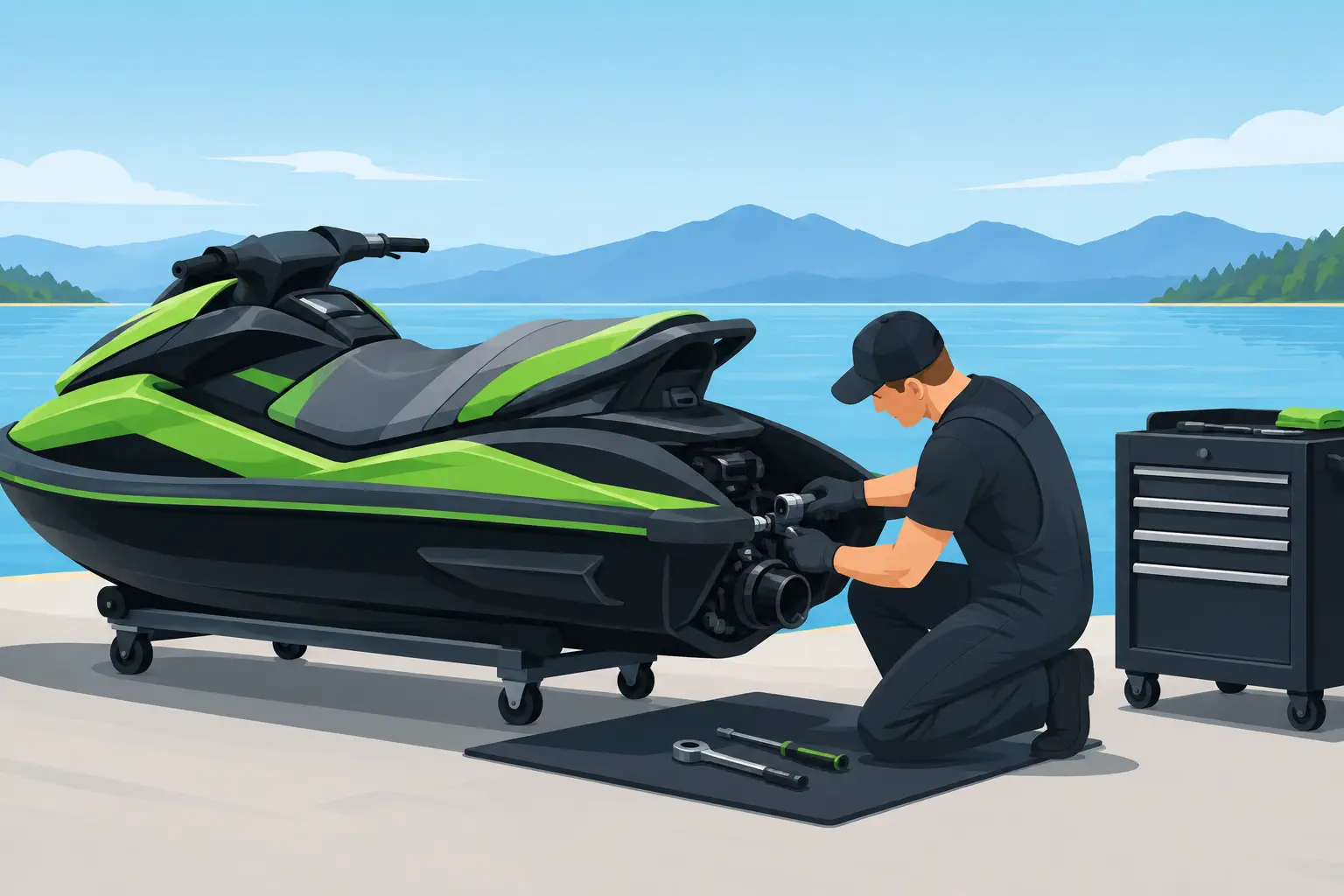
A Kawasaki can feel perfect at the ramp, then lose power under load, throw a warning light, surge at cruise speed or refuse to start after a weekend on the water. Kawasaki JetSki repairs should never be a process of fitting parts until the problem disappears. The right repair starts with accurate diagnosis, then follows through with workmanship that protects the engine, electronics and reliability you expect from a high-output PWC.
For recreational riders, a breakdown can ruin the one day you had planned on the water. For performance owners, small faults can quickly become expensive damage when boost, fuel delivery and engine temperature are not under control. Whether your ski is stock, tuned or built for serious speed, the repair approach needs to match the machine.
Why Kawasaki JetSki repairs need specialist diagnosis
Modern Kawasaki JetSkis combine high-performance engines with complex electrical, cooling and fuel systems. A loss of power is not automatically a supercharger problem. A hot-running engine is not automatically a blocked cooling line. Fault codes are useful, but they are only one part of the picture.
Proper diagnostics look at the symptoms, service history and how the ski behaves on the water. That means checking for fault codes, inspecting wiring and connectors, testing charging voltage, assessing fuel pressure where required, examining cooling flow and confirming engine condition before recommending major parts. On supercharged platforms, boost performance and intake tract integrity also matter.
This is where a general mechanical approach can fall short. A PWC operates in a harsh environment, often spends months sitting between rides and can be exposed to saltwater, heat and high RPM. Corrosion inside electrical connectors, water contamination in fuel, a weak battery or a small leak in an intake system can create faults that look far more serious than they are. Equally, a genuine mechanical issue can be hidden by a quick reset or temporary fix.
The goal is not simply to get the ski running. It is to identify why the fault occurred, repair it correctly and reduce the chance of it returning on the next ride.
The warning signs worth acting on early
Most major repair bills start as a smaller issue that was easy to ignore. If your Kawasaki is hard to start, feels flat out of the hole, revs inconsistently, overheats, takes on water or shows a warning message, it is worth getting it checked before continuing to ride it hard.
Pay particular attention to a sudden drop in top speed, vibration that was not there previously, rough idle, fuel smell, smoke, oil leaks or an engine bay that looks unusually wet. A ski that runs normally on the trailer but falls over under load needs more than a driveway test. Water testing may be necessary to see what is happening when the drivetrain, cooling system and engine are working at full demand.
Battery and charging faults are also regularly underestimated. A battery can have enough charge to crank the engine yet still cause voltage-related electronic issues. Corroded terminals, poor earth connections and damaged wiring can create intermittent faults that are frustrating to chase without the right testing process.
If your ski has ingested water, stop trying to start it. Repeated cranking can turn a recoverable situation into serious internal engine damage. It needs prompt inspection, controlled drying and an assessment of the intake, exhaust, oil and electrical systems.
Common Kawasaki repair areas
Not every repair is an engine-out job. In many cases, early attention to routine service items prevents the larger failures performance owners worry about. The following areas deserve close attention on Kawasaki PWCs:
- Cooling system faults: Blocked passages, damaged hoses, loose clamps and debris can restrict cooling flow. Overheating needs immediate investigation, especially on a supercharged engine.
- Fuel system issues: Old fuel, contaminated fuel, failing pumps, injectors or filters can cause hard starting, hesitation and lean running. A lean engine under load is not a risk worth taking.
- Electrical and charging faults: Batteries, regulators, stators, starter circuits, connectors and wiring can all be affected by moisture and corrosion.
- Driveline damage: Wear in the impeller, pump housing, wear ring, bearings or seals can hurt acceleration and top speed while increasing vibration.
- Engine and supercharger concerns: Compression loss, oiling issues, boost leaks and worn internal components require careful testing before a repair path is chosen.
A damaged pump assembly is a good example of why inspection matters. An impeller with minor edge damage might be repairable, while cavitation caused by a worn wear ring or pump seal may require different work entirely. Fitting performance hardware without resolving the underlying pump issue can leave power on the table and produce disappointing results.
Servicing is part of repair prevention
The best Kawasaki JetSki repairs are often the ones you avoid through consistent servicing. Oil and filter changes, spark plugs, corrosion treatment, cooling checks, battery maintenance and pump inspection are not glamorous jobs, but they are fundamental to reliability.
Service intervals should reflect how the ski is used. A freshwater recreational machine with modest hours has different needs from a saltwater ski ridden hard every weekend. A tuned or supercharged craft deserves an even more disciplined maintenance schedule because higher cylinder pressure and greater heat place more demand on fuel quality, lubrication and cooling performance.
After saltwater use, flush the cooling system according to the manufacturer procedure, wash the ski thoroughly and inspect the engine bay. Do not treat a quick exterior rinse as complete care. Salt left around hose fittings, electrical plugs and metal hardware keeps working long after the ride is over.
Storage matters as well. Before an extended lay-up, stabilise the fuel where appropriate, keep the battery maintained, ensure the engine bay is dry and inspect the craft before its first outing of the season. Starting a ski after months in storage and heading straight offshore is a poor way to discover a fuel or electrical fault.
Performance modifications change the repair conversation
A tuned Kawasaki can deliver sharper throttle response, stronger acceleration and serious speed, but modifications need to be supported by the rest of the package. ECU calibration, intake improvements, intercooling, fuel system upgrades, camshafts and internal engine work must be selected and installed as a matched combination.
This is especially relevant when diagnosing a modified ski. A fault on a standard craft may have a straightforward factory specification to test against. On a performance build, the workshop needs to understand what has been changed, how it was calibrated and whether supporting components are operating within safe limits.
There are trade-offs. More power usually means more heat, more load and a smaller margin for neglected servicing. An aggressive tune may suit a race-focused owner who monitors the machine closely, but it may not be the right choice for a family ski that spends long days towing riders and idling around busy waterways. The best result is not the largest advertised number. It is a package that delivers measurable performance without compromising the reliability your use demands.
For owners across the Central Coast and NSW, VTECHTUNED approaches repairs and upgrades as part of the same standard: diagnose precisely, use quality components and complete the work with the long-term condition of the ski in mind. That continuity matters when a machine needs routine servicing today and a performance plan later.
When repair, rebuild or replacement makes sense
The right answer depends on the fault, the ski’s condition and your intended use. A targeted repair makes sense when the issue is isolated and the engine remains healthy. Rebuilding becomes more worthwhile when testing shows internal wear, water damage or repeated failures, particularly if the owner plans further performance upgrades.
Replacement components can be the smarter option when a part is heavily corroded, unavailable for economical repair or likely to compromise reliability if reused. Cheap parts can also become expensive quickly in a high-performance PWC. A lower upfront price is not a saving if fitment, materials or calibration create another failure.
Ask for a clear explanation of the diagnosis, the recommended repair and the options available. A professional workshop should be able to explain what is urgent, what can be monitored and what the likely consequences are if a repair is delayed. Good advice gives you control over the decision without guessing what is happening beneath the seat.
Your Kawasaki should leave the workshop ready to perform, not merely able to start. If something feels wrong on the water, act early, provide an honest history of the issue and let proper testing lead the repair. That is how you protect the ride, the investment and the confidence to put the throttle down when it counts.



