
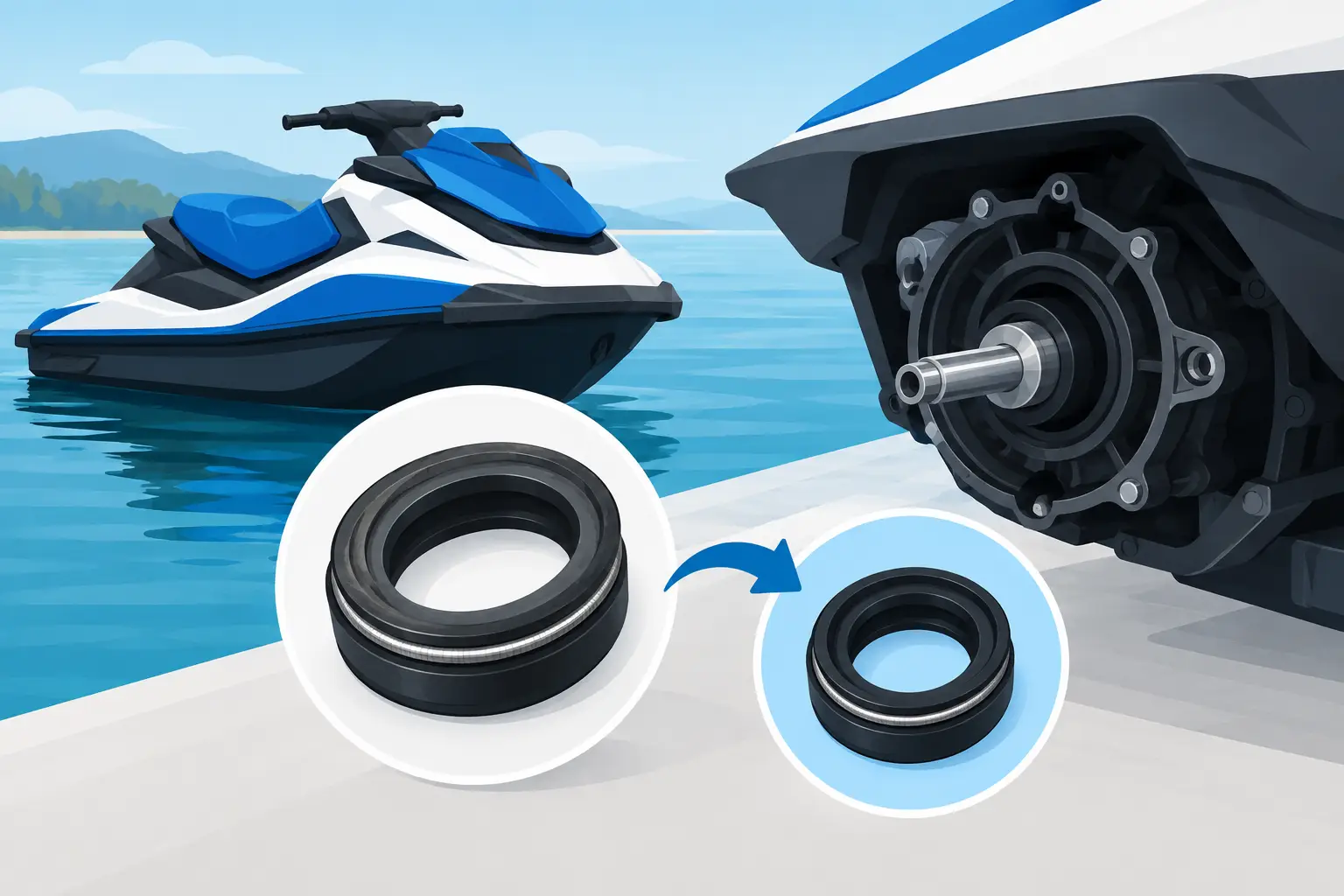
A carbon seal is a small driveline component with a big job: it keeps water outside the hull while the driveshaft spins at serious RPM. On a Sea-Doo, a worn carbon ring, damaged rubber bellows or incorrect seal pressure can turn a great ride into a water ingress problem quickly. Knowing when to replace a PWC carbon seal is about more than chasing a service interval. It is about spotting the warning signs before they become expensive.
For recreational riders, a failed seal can mean a wet bilge and a recovery back to the ramp. For modified and supercharged machines, the risk is higher. More RPM, harder launches, rough-water riding and race-style use all place more demand on the driveline. Treat the carbon seal as a critical reliability item, not an afterthought.
What a PWC carbon seal actually does
The carbon seal system is most commonly associated with Sea-Doo PWCs. It sits around the driveshaft where it passes through the hull and uses a carbon ring pressed against a stainless-steel ring to create a watertight rotating seal. The rubber bellows supplies the tension that holds those surfaces together.
Unlike a conventional lip seal, the carbon ring is designed to run against the stainless ring with a thin water film for lubrication. It is a simple, effective design when everything is correctly aligned and in good condition. But it does not tolerate impact damage, poor installation, excessive shaft movement or neglected components forever.
Yamaha and Kawasaki models generally use different driveline sealing arrangements. Do not assume a “carbon seal” diagnosis applies to every PWC just because water is appearing in the hull. Correct diagnosis matters, particularly when the machine has had pump work, engine repairs or accident damage.
There is no single replacement interval
There is no honest rule that says every PWC carbon seal must be replaced at a particular number of hours. Some last for years on a carefully maintained ski used in calm water. Others need attention much earlier because of beaching, pump impacts, high-hour use, driveline modifications or a previous repair that has altered alignment.
A performance Sea-Doo that sees repeated hard launches and high engine speed deserves closer inspection than a lightly used cruiser. Likewise, a ski that has struck debris, ingested a rope, damaged its pump or had an engine removed should have the seal and driveline checked before it returns to regular use.
The right approach is condition-based maintenance. Inspect it during routine servicing, especially if you notice any change in bilge water volume, vibration or driveline behaviour. Replacing a questionable seal assembly early is far cheaper than ignoring it until the hull is taking on water.
Signs it is time to replace a PWC carbon seal
The clearest warning is water entering the hull while the ski is in the water or running. A small amount of residual water after riding can be normal, depending on how the PWC is used and washed down. A steady increase in water, however, needs investigation. If the bilge is noticeably wetter after each session, do not write it off as spray or condensation.
Pay particular attention to water that appears when the engine is running, during acceleration or after extended riding. A carbon seal may look acceptable at rest but leak once driveline speed and hull movement increase.
Visible wear is another reason to act. The carbon ring should have a smooth, even contact face. Cracks, chips, deep grooves, uneven wear or a visibly damaged edge are replacement signs. The stainless-steel ring should also be smooth and true. If it is scored, pitted, warped or heat-marked, fitting a new carbon ring alone may not solve the problem.
Inspect the rubber bellows closely. A split, perished or distorted bellows cannot maintain correct pressure on the sealing faces. Weak bellows tension can allow water past the seal, particularly at idle or when the hull is flexing in chop. The retaining clips and support components also matter. A clip out of position, a displaced bellows or an incorrectly seated assembly can create a leak even with new parts.
Vibration deserves immediate attention. A damaged carbon seal does not always cause vibration itself, but vibration may indicate a bent driveshaft, pump issue, bearing issue or misalignment that is damaging the seal. If your Sea-Doo has developed a new vibration after an impact, rope ingestion or pump repair, stop chasing performance until the driveline has been properly assessed.
What causes premature carbon seal failure?
The most common cause is physical damage. Beaching aggressively, riding in shallow water, striking debris and ingesting rope can load the pump and driveshaft in ways the seal was never designed to handle. A hard impact can also affect the pump shoe, hull, pump mounting or engine alignment, all of which can influence how the shaft runs through the seal.
Heat and friction are another concern. The carbon and stainless faces need correct contact pressure and water lubrication. If the ski has run dry for too long, if the seal was installed incorrectly, or if the components are not aligned, excess heat can damage the contact surfaces. This is one reason a quick visual inspection after major work is worthwhile.
Engine removal and reinstallations also deserve respect. On many Sea-Doo platforms, the carbon seal is disturbed during driveline work. If the engine mounts, coupler, driveshaft, pump or hull components are not correctly positioned, the seal can be loaded unevenly. The result may be accelerated wear, leakage or a repeat failure shortly after parts have been fitted.
Modified PWCs add another layer. Increased power does not automatically destroy a carbon seal, but high-RPM operation exposes existing driveline weaknesses sooner. A tuned or supercharged ski should have its pump, shaft, bearings, mounts and seal system treated as one package. Power without reliability is not performance.
How to inspect the seal safely
Start with the engine off and the PWC on level ground. Remove the seat and inspect the area around the driveshaft seal with a bright light. Look for obvious cracking in the bellows, displaced clips, carbon-ring damage and signs that the stainless ring is not sitting squarely.
Then check the bilge for fresh water and trace where it is entering. Water can come from cooling hoses, exhaust connections, transom fittings, hull damage or a loose drain plug, so avoid replacing carbon-seal parts on guesswork alone.
A controlled water test is often the best next step. With the ski launched safely and the engine area accessible where practical, observe whether water enters around the seal area at idle and with careful changes in engine speed. This is workshop-level diagnostic work on many models. Keep hands, tools, clothing and loose items well clear of rotating driveline components.
If you are unsure whether the leak is from the carbon seal, have a specialist inspect it. A fast diagnosis can prevent a small issue becoming corrosion, electrical damage, bearing failure or a stranded day on the water.
Replace the system, not just the obvious worn part
A cracked carbon ring obviously needs replacement. But a quality repair should assess the whole sealing system: carbon ring, stainless ring, bellows, retaining clips, driveline condition and alignment. Reusing a scored stainless ring against a new carbon ring, for example, risks shortening the life of the new component.
There is a trade-off here. Replacing only the visibly damaged part can reduce the immediate bill, but it may not address the cause of failure. Replacing every related part without inspection can be unnecessary. The right repair is based on the condition of the parts and the history of the ski.
For Sea-Doo owners around the Central Coast, VTECHTUNED can inspect water ingress issues alongside pump, driveline, engine-mount and performance-work requirements. That matters when your machine is tuned, modified or has suffered an impact, because the seal may be the symptom rather than the root cause.
Do not ignore water in the hull
A carbon seal issue rarely improves with more riding. Water can reach electrical connections, promote corrosion and make it harder to identify the original leak. At worst, a significant leak can compromise safety well before you make it back to the ramp.
If your PWC is taking on more water than usual, has a damaged bellows or carbon ring, or has developed vibration after driveline work, pull it from service and inspect it properly. A carbon seal is a relatively compact component, but getting it right protects the machinery you have invested in and keeps the next ride focused on throttle response, not the bilge pump.



