
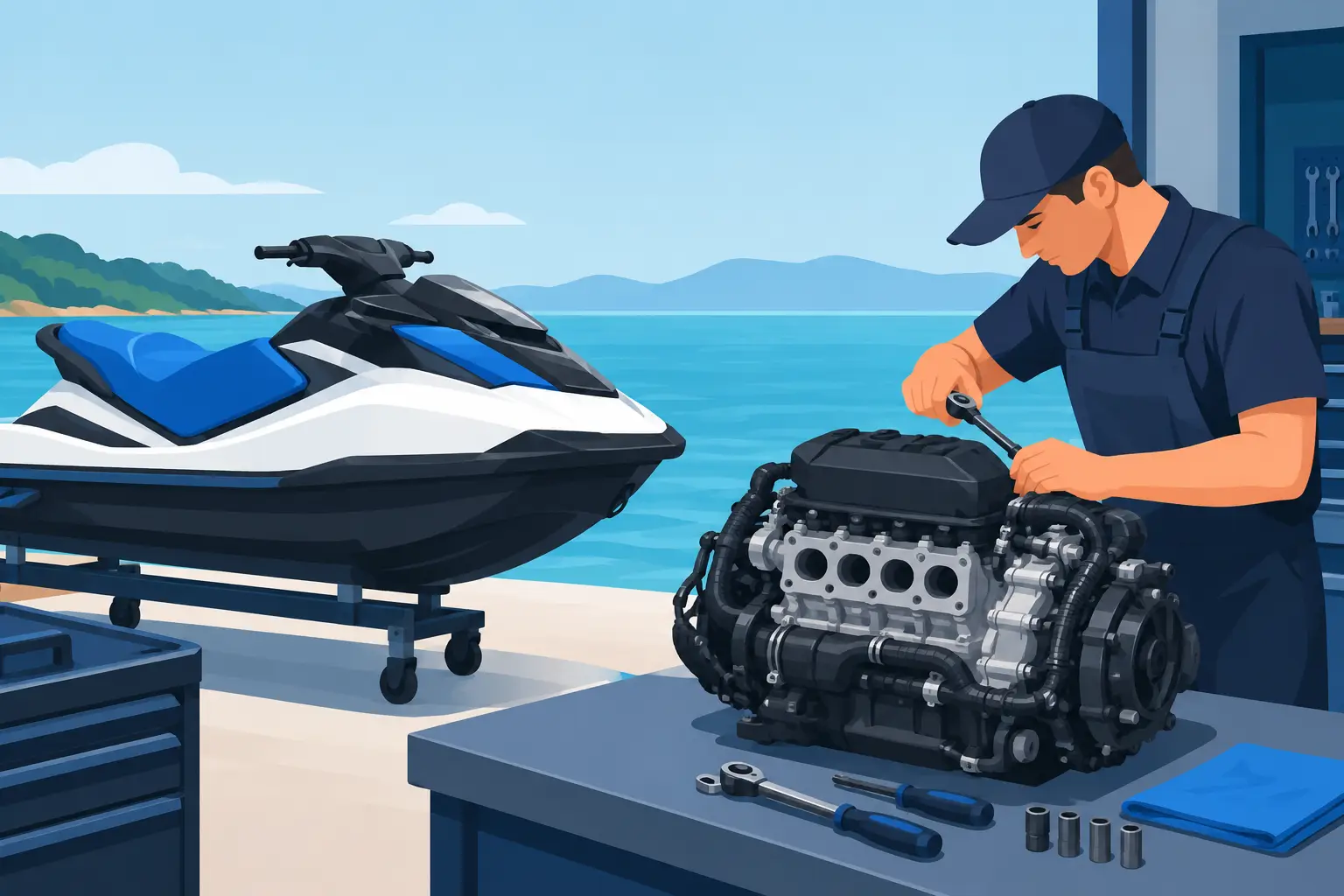
A JetSki that has lost compression, developed a bottom-end knock or started filling the oil with metal is not a machine to keep riding until the end of summer. Engine rebuilding is the point where a problem is properly measured, traced and corrected – not covered up with a quick repair that leaves the real failure waiting for the next hard ride.
For Sea-Doo, Yamaha and Kawasaki owners, the right decision depends on more than hours alone. A well-maintained recreational PWC may run strongly for years, while a supercharged ski with aggressive ECU tuning, higher boost or regular race use can need attention far sooner. The goal is not simply to get the engine running again. It is to build an engine that suits how the ski is ridden and delivers power without compromising reliability.
Signs Your JetSki May Need Engine Rebuilding
A rebuild is usually considered after a clear mechanical failure, but the warning signs often appear before a rod exits the block or a piston damages the bore. Hard starting, an uneven idle, lower top speed and reduced throttle response can all point to compression or fuelling issues. They can also be caused by simpler faults, which is why diagnosis comes before parts.
Pay attention if you notice any of the following:
- A persistent knocking, rattling or rumbling noise that rises with engine speed.
- Low, uneven or rapidly declining compression between cylinders.
- Metal debris in the oil, filter or drained supercharger oil where applicable.
- Milky oil, signs of water ingestion, overheating, or an engine that repeatedly enters limp mode.
A sudden loss of power after an over-rev, a failed supercharger component or a water ingestion event deserves immediate inspection. Continuing to ride can turn a repairable crankshaft, piston or valvetrain issue into major crankcase and cylinder damage. The same applies to an engine that has been tuned beyond the capability of its current fuel system, cooling setup or internals.
Why PWC Engine Failures Need Proper Diagnosis
Personal watercraft engines work hard. They deal with high sustained revs, load from the jet pump, heat, vibration and a marine environment that punishes poor maintenance. On forced-induction platforms, cylinder pressure and intake temperature add another level of stress. A small issue in the tune, fuel delivery or cooling system can become expensive quickly.
The visible damage is not always the root cause. A melted piston may be linked to a lean cylinder, poor-quality fuel, detonation, an injector problem or incorrect calibration. A spun bearing can result from oil starvation, contaminated oil, excessive rpm, bearing clearance issues or a damaged crankshaft. Water in the engine can corrode internal components long after the initial incident if it is not dealt with correctly.
That is why a serious workshop does not treat engine rebuilding as an off-the-shelf parts swap. The engine needs to be stripped and inspected, then the failed component must be connected to the reason it failed. Otherwise, the new build may inherit the exact conditions that destroyed the old one.
What a Proper Engine Rebuild Involves
The scope of a rebuild varies. In some cases, a top-end rebuild with pistons, rings, cylinder work and careful inspection is appropriate. In others, the engine needs a full teardown with a crankshaft, rods, bearings, oil pump inspection, cases, head and valvetrain assessed. Once the engine has suffered a significant failure, assuming the lower end is fine is a gamble.
The rebuild process starts with testing and inspection. Compression and leak-down results, fault codes, oil condition, coolant condition and running behaviour provide the initial picture. Once dismantled, the bores, pistons, rings, crankshaft journals, bearings, connecting rods, cylinder head and cam components are measured against the required tolerances.
Machining and cleaning matter just as much as the parts chosen. Cylinder bores may need honing or machining, mating surfaces must be checked, oil galleries need thorough cleaning and critical clearances must be set accurately. Assembly requires correct fastener procedures, timing verification and attention to every sealing surface. Precision is what separates a durable build from one that looks good on the stand but fails under load.
A rebuild should also include inspection of the systems around the engine. Check the intercooler and charge piping on boosted applications, the fuel pump and injectors, intake tract, cooling passages, exhaust components, battery health and jet pump. If a supercharger, failed air filter or damaged intercooler introduced debris, those components cannot be ignored just because the engine has been replaced or rebuilt.
Standard rebuild or performance build?
A standard rebuild is the sensible path for many recreational owners. It restores reliable operation with quality components suited to the factory power level or a conservative tune. It makes sense when the priority is dependable family riding, towing and long days on the water.
A performance build is different. Forged pistons, upgraded rods, valvetrain hardware, camshafts and other supporting components may be needed for higher boost, more rpm or race-focused output. These parts are not automatically better for every ski. They need to match the intended power target, fuel quality, ECU calibration and rider expectations.
There is always a trade-off. More power can mean more heat, more load and tighter maintenance requirements. A well-planned package with realistic power goals is usually faster and more enjoyable in the long run than chasing a headline number with mismatched hardware. The strongest build is the one that stays consistent through repeated hard use.
ECU Tuning Is Part of Reliability
Mechanical work and calibration are inseparable on modern high-performance PWCs. After engine rebuilding, an ECU tune should match the engine specification, injectors, intake, exhaust, boost level and available fuel. Running a generic calibration after changing key components can leave power on the table, but more importantly, it can place the engine at risk.
Correct tuning manages fuelling, ignition timing, boost control and engine protection strategies. It should be approached with the same care as the mechanical build. A ski used on premium pump fuel in NSW needs a different margin for safety than a dedicated race machine supported by appropriate fuel and frequent inspections.
For modified platforms, data and real-world testing are valuable. Stable air-fuel ratios, sensible intake temperatures and clean throttle response are signs that the package is working as intended. If there is a problem, it is far cheaper to identify it during controlled testing than while the ski is at full throttle offshore.
Protecting a Fresh Engine on the Water
The first hours after a rebuild set the tone for the engine’s service life. Follow the workshop’s break-in procedure rather than relying on old advice from a different engine type. Heat cycles, varying rpm, avoiding extended full-throttle operation initially and checking fluid levels all have a place. The precise process depends on the engine, components and build specification.
After the initial run time, inspect the ski carefully. Look for leaks, loose clamps, abnormal noises and warning codes. Change oil and filters when advised, then inspect what comes out. A small amount of normal assembly-related residue is one thing; obvious metal or unusual contamination needs immediate attention.
Long-term reliability comes from routine servicing as much as the build itself. Use the correct oil, maintain the cooling system, service supercharger components to schedule where applicable and do not ignore a change in sound or performance. Flush the ski after saltwater use, keep the intake system sealed and avoid storing it with water trapped where it should not be.
Choosing the Right Workshop for the Job
Engine rebuilding demands more than general mechanical experience. A specialist should understand the common failure patterns of Sea-Doo, Yamaha and Kawasaki engines, along with the interaction between internal components, marine cooling, forced induction and ECU tuning. They should be prepared to explain what failed, what parts are being replaced and why the proposed solution fits your riding.
For owners on the Central Coast, VTECHTUNED approaches engine work as a complete package: diagnosis, quality components, precision assembly, supporting upgrades and calibration where required. That approach avoids the common mistake of rebuilding the engine while leaving the cause of the failure untouched.
If your JetSki is noisy, down on power or showing signs of internal damage, stop guessing and get the evidence first. A clear diagnosis and a build matched to your actual use will protect your investment far better than the cheapest quick fix.



