
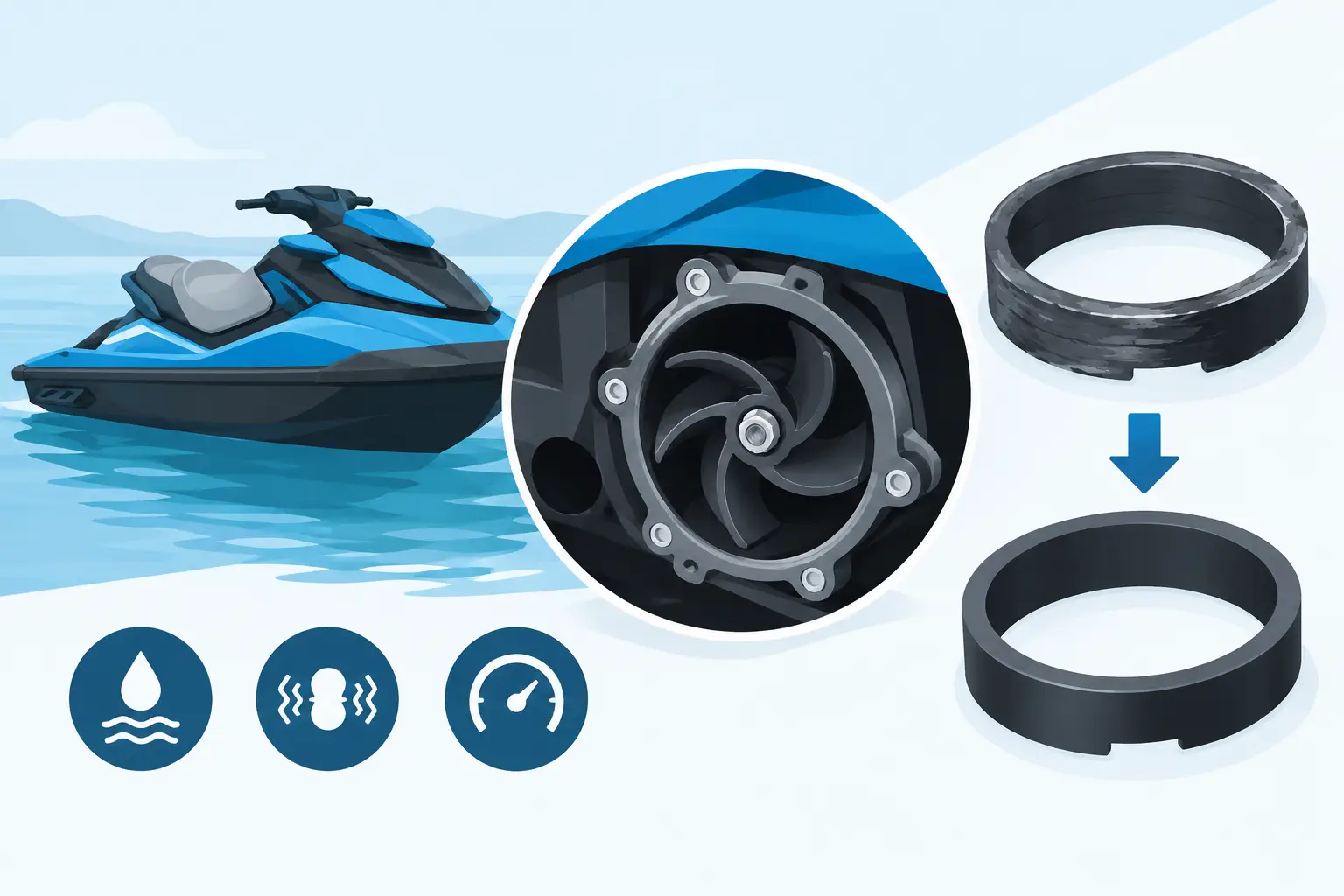
A PWC wear ring replacement is not a cosmetic repair. It is one of the fastest ways to restore the hard launch, clean hook-up and predictable throttle response your ski was built to deliver. When the clearance between the impeller and wear ring opens up, water slips past the blades instead of being driven through the pump. The result is lost thrust, rev flare and a ski that feels lazy when you ask it to perform.
For a recreational rider, that may mean a sluggish take-off or an annoying hesitation when pulling a skier. For a modified Sea-Doo, Yamaha or Kawasaki, it can mean wasted power and inconsistent acceleration just when the engine is making its best torque. A healthy jet pump is the final link between engine power and forward motion. If that link is compromised, no amount of ECU tuning or engine work will deliver the result it should.
When Does a PWC Wear Ring Replacement Make Sense?
The wear ring sits inside the jet pump housing, surrounding the impeller. Its job is simple: maintain a tight, controlled clearance around the impeller tips. That clearance lets the pump move water efficiently while protecting the more expensive pump components from minor contact and debris.
Most wear rings are made from a sacrificial material such as composite plastic, although upgraded stainless-steel options are available for some applications. The standard-style ring is designed to take the hit before your impeller or pump housing does. That is useful, but it also means it is a service item – especially on skis that see shallow ramps, sandy waterways or regular hard riding.
A replacement is usually due when the ring is gouged, split, distorted or worn enough to create excessive impeller clearance. The right timing depends on the ski, the pump design, how it is ridden and whether it has been modified. A race or high-output supercharged setup demands more from the pump than a stock cruising ski, so small losses in efficiency become more noticeable.
The Signs of a Damaged Wear Ring
The most common complaint is an engine that revs cleanly but the ski does not accelerate with the same urgency. Riders often describe it as slipping, spinning out or feeling as though the pump is sucking air. Technically, it is commonly cavitation or ventilation, and a damaged wear ring is one possible cause.
Watch for these signs:
- RPM rises sharply on take-off but speed does not build at the same rate.
- Acceleration is inconsistent, particularly from a standing start or during tight turns.
- You hear a harsh rattling, grinding or unusual pump noise after ingesting debris.
- Visual inspection reveals grooves, chunks missing from the ring, cracks or clear impeller contact marks.
Do not assume every cavitation complaint needs only a wear ring. A bent or damaged impeller, worn pump bearings, damaged stator vanes, an air leak around the intake side, debris in the pump or a problem with the pump shoe can create similar symptoms. On high-performance PWCs, diagnosis matters. Replacing a ring without checking the rest of the pump can leave the real fault in place.
Why Clearance Matters More Than It Looks
At rest, a few marks inside a wear ring can look harmless. Under throttle, the impeller is moving a serious volume of water at high speed. Excess clearance gives that pressurised water an easier path back around the blade tips. Rather than converting engine RPM into thrust, the pump loses efficiency internally.
That loss is particularly obvious during holeshot, when the pump is loaded hardest. It can also affect mid-range pull, top speed and the consistency of a ski in rough water. On a modified platform, owners sometimes chase the issue through fuelling, boost or calibration when the problem is mechanical at the pump. Start with the fundamentals before changing the tune.
What Causes Wear Ring Damage?
The usual culprit is debris. Sand, stones, shells, sticks and pieces of rubbish can enter the intake grate and pass into the pump. Even a brief moment of riding through shallow, silty water can score the ring and nick the impeller.
Beach launching is a major risk area. Starting the engine while the ski is sitting in very shallow water can pull abrasive material straight into the intake. The safer approach is to float the ski into adequate depth before starting, then use minimal throttle until clear of the shoreline. The same applies when returning to the ramp – shut down early and walk or coast the ski in where practical.
Hard use also accelerates wear. Repeated launches, aggressive turning, high-output engines and heavy loads all work the pump harder. That does not mean performance riding causes failure by itself. It means the pump condition needs to be checked more closely, because reduced clearance control will show up sooner in the way the ski rides.
Choosing the Right Replacement Ring
A standard composite wear ring is often the correct choice for a stock or lightly modified PWC. It is generally cost-effective, protects the pump housing and works well when matched to a sound impeller. For many owners, fitting a quality replacement ring and inspecting the pump properly is the best value repair.
Stainless-steel wear rings can suit selected performance applications, but they are not automatically the best upgrade. They offer durability and can provide a stable running surface, yet a hard ring changes the consequences of debris ingestion. If a stone enters the pump, the impeller may be more likely to suffer damage than it would against a sacrificial composite ring. Fitment quality, correct impeller compatibility and the way the ski is used all matter.
There is also no benefit in fitting an upgraded ring around an impeller with damaged leading edges, bent blades or excessive tip wear. The components work as a system. A professionally inspected and matched pump assembly delivers better results than one premium part fitted in isolation.
What Proper Replacement Involves
A quality PWC wear ring replacement begins with removing the pump and inspecting every component that influences water flow and pump alignment. The ring itself may be the visible issue, but the inspection should also cover the impeller, stator, bearings, pump cone, seals, mounting surfaces and intake area.
The old ring needs to be removed without damaging the pump housing. Depending on the model and ring material, this may involve controlled heat, cutting or pressing procedures. The replacement ring must then be installed squarely and seated correctly. Incorrect fitment can distort the ring, create poor clearance or cause it to move in service.
Once fitted, the impeller clearance should be checked and the impeller inspected for contact damage. If the impeller has touched the old ring aggressively, it may need repair or replacement. Reassembly should include the correct seals, fasteners and torque procedures for the specific Sea-Doo, Yamaha or Kawasaki platform. A quick parts swap can become an expensive repeat job if water sealing or pump alignment is overlooked.
Keep the New Ring Alive Longer
A new wear ring will not prevent every debris strike, but riding habits make a real difference. Avoid powering through shallow water, do not start the engine where the intake can draw sand, and clear weeds or debris from the grate before they work deeper into the pump. After an impact or sudden loss of thrust, stop and inspect rather than continuing to run the ski hard.
It is also smart to include a pump inspection in routine servicing, particularly before a big holiday run, race event or long-distance ride. A worn ring rarely improves with more use. Catching it early may save the impeller and prevent a disappointing day on the water.
For riders chasing sharper acceleration or trying to diagnose cavitation on a modified ski, VTECHTUNED can inspect the complete pump system rather than guessing at a single part. The best result is a pump that matches the engine’s output, the rider’s use and the reliability expected from a properly prepared PWC.
If your ski is revving without delivering the push it should, treat the jet pump as seriously as the engine. Fresh clearance, a healthy impeller and careful inspection can put the response back where it belongs – immediate, controlled and ready when you squeeze the throttle.



