
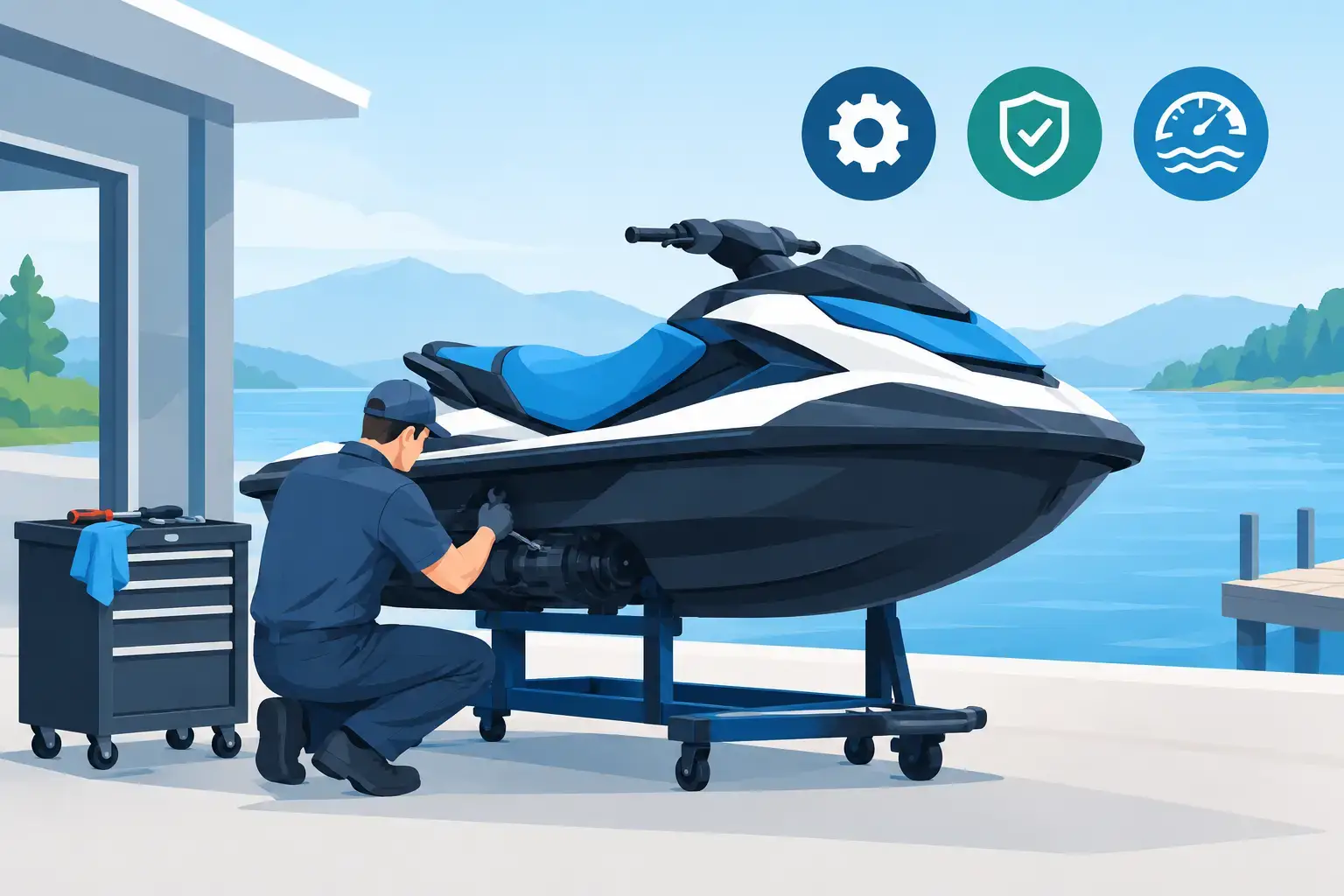
A PWC that cranks slowly, runs hot, loses boost or feels flat out of the hole is not simply having a bad day. It is giving you an early warning. Quality PWC repairs start by finding the actual cause, not replacing parts until the symptom disappears. For Sea-Doo, Yamaha and Kawasaki owners, that difference protects performance, reliability and the value of the machine.
A personal watercraft works hard in an unforgiving environment. Saltwater, heat cycles, vibration, high RPM, cooling water and aggressive throttle inputs all place pressure on mechanical and electrical systems. Add aftermarket performance parts or ECU tuning and the margin for poor servicing becomes even smaller. The right repair process is precise, brand-aware and built around how you use the ski.
Why specialist PWC repairs matter
A PWC is not a small motorcycle with a jet pump bolted on. Its engine, cooling system, driveline, electronics and hull all work together. A fault in one area can quickly create a problem elsewhere.
For example, an overheating issue may be caused by restricted cooling passages, debris in the intake, a damaged wear ring, a fault in the cooling circuit or an engine issue creating excess heat. A weak top speed result might be a supercharger problem, poor compression, an intercooler leak, cavitation, a damaged impeller or an ECU fault. Guesswork costs time and can turn a repairable issue into an engine build.
This is why specialist diagnosis matters. A workshop needs to inspect the machine as a complete package, read fault data where applicable, test components and understand the known weak points of each platform. A stock recreational ski and a high-output supercharged race build may show the same symptom for very different reasons.
The signs you should not ignore
Some faults arrive suddenly. Others give you plenty of warning before they leave you stranded offshore or cause expensive internal damage. Pay attention if your PWC has hard starting, rough idle, warning lights, reduced speed, unusual vibration, water in the hull, oil leaks or a change in exhaust note.
Cavitation deserves particular attention. If the engine revs climb but the ski does not accelerate cleanly, the jet pump may be drawing air rather than loading correctly. Worn wear rings, impeller damage, pump shoe sealing issues, debris or hull damage can all be involved. Continuing to ride it hard can worsen the damage and make the machine unpredictable out of turns.
A hot-running ski is another issue that should be dealt with promptly. Modern PWCs have protection systems, but relying on them is not a repair strategy. Shut the machine down, avoid repeated test runs and have the cooling system and engine checked properly. Heat can affect hoses, sensors, exhaust components, pistons and head gasket sealing.
Diagnosis before parts replacement
The best repair is not always the quickest-looking repair. It is the one that identifies the failure, corrects it and checks for the reason it happened in the first place.
A proper inspection may include a visual assessment of the hull and engine bay, battery and charging checks, fault-code scanning, compression or leak-down testing, fuel system checks, cooling system inspection, driveline assessment and jet pump measurement. On a boosted platform, the supercharger, intercooler plumbing, clamps and intake tract need close attention as well.
This process is particularly valuable after a mechanical failure. If an engine has suffered a piston, valve or bearing issue, fitting replacement components without checking oil contamination, fuelling, calibration, cooling and boost control risks repeating the failure. Engine repairs should be supported by a clear plan, whether that means returning the ski to dependable stock power or building it for a defined performance target.
Servicing is the foundation of reliable power
Many costly PWC repairs begin as missed maintenance. Oil that has broken down, a tired battery, corroded terminals, old spark plugs, contaminated fuel or a neglected supercharger service can all create problems that seem unrelated at first.
Service intervals are a baseline, not a finish line. A ski used occasionally in freshwater has different needs to one ridden regularly in saltwater, launched from the beach or operated hard in hot weather. A modified PWC also needs a more disciplined maintenance schedule than a standard cruiser. More power means more cylinder pressure, more heat and more demand on the fuel, cooling and driveline systems.
After each saltwater ride, flush the cooling system according to the manufacturer procedure, wash the exterior thoroughly and inspect the engine bay for water or loose fittings. Do not just close the seat and assume everything is fine. A quick look can reveal a leaking hose, oil residue, belt dust or a loose clamp before it develops into a major repair.
Before longer trips, check fluid levels, battery condition, steering and reverse operation, pump area, intake grate and safety equipment. If the ski has been sitting for months, do not treat the first ride as a test session. Fuel condition, battery voltage and general inspection should come first.
Hull, fibreglass and insurance repairs need the same standard
Mechanical damage is only part of the PWC repair picture. A cracked hull, damaged sponson, broken bumper, worn ride plate or impact damage around the intake can affect handling, speed and safety.
Fibreglass repairs need more than a cosmetic patch. The damaged area must be assessed for structural movement, water ingress and alignment. On performance skis, the condition of the hull and running surface directly affects how the craft hooks up, turns and carries speed. A poor repair can create handling problems that are hard to diagnose later.
After an accident, it also pays to document the condition of the ski properly. Damage that looks limited to the outside may extend to mounts, steering components, the pump, cooling lines or internal hull sections. An insurance inspection report and a detailed repair scope help ensure the work addresses the complete damage, not only the obvious marks.
Repairs and performance upgrades must work together
There is a point where repairing a worn component and upgrading it make equal sense. If a supercharger, intercooler, injector, valvetrain component or engine internal needs replacement, the best option depends on your goal, budget and how you ride.
For a family ski used for weekends on Brisbane Water, stock-style reliability may be the right call. For an enthusiast chasing stronger acceleration, improved throttle response or a competitive setup, upgraded hardware paired with suitable ECU tuning may deliver better long-term value. The key is matching parts, calibration and supporting systems.
Installing performance components without the right tuning can create lean running, detonation, heat issues or poor drivability. Equally, an aggressive tune on tired mechanical hardware is a shortcut to trouble. VTECHTUNED approaches performance work as a complete system: inspect the foundation, choose quality components, install them correctly and calibrate the package for measurable, dependable results.
Choosing the right workshop for PWC repairs
Ask how the workshop diagnoses faults, whether it works regularly on your brand and what testing is included before parts are recommended. Clear communication matters too. You should understand what failed, what caused the failure where possible, what work is required now and what should be monitored later.
A good workshop will not promise that every repair has one simple answer. Corrosion, previous work, riding conditions and modifications all affect the scope. But it should provide a practical path forward, use suitable parts and stand behind careful workmanship.
Your PWC should leave the workshop ready to perform, not merely ready to start. Address small changes early, service it with purpose and choose repairs that suit the way you ride. That is how you protect every hard-earned hour on the water.



