
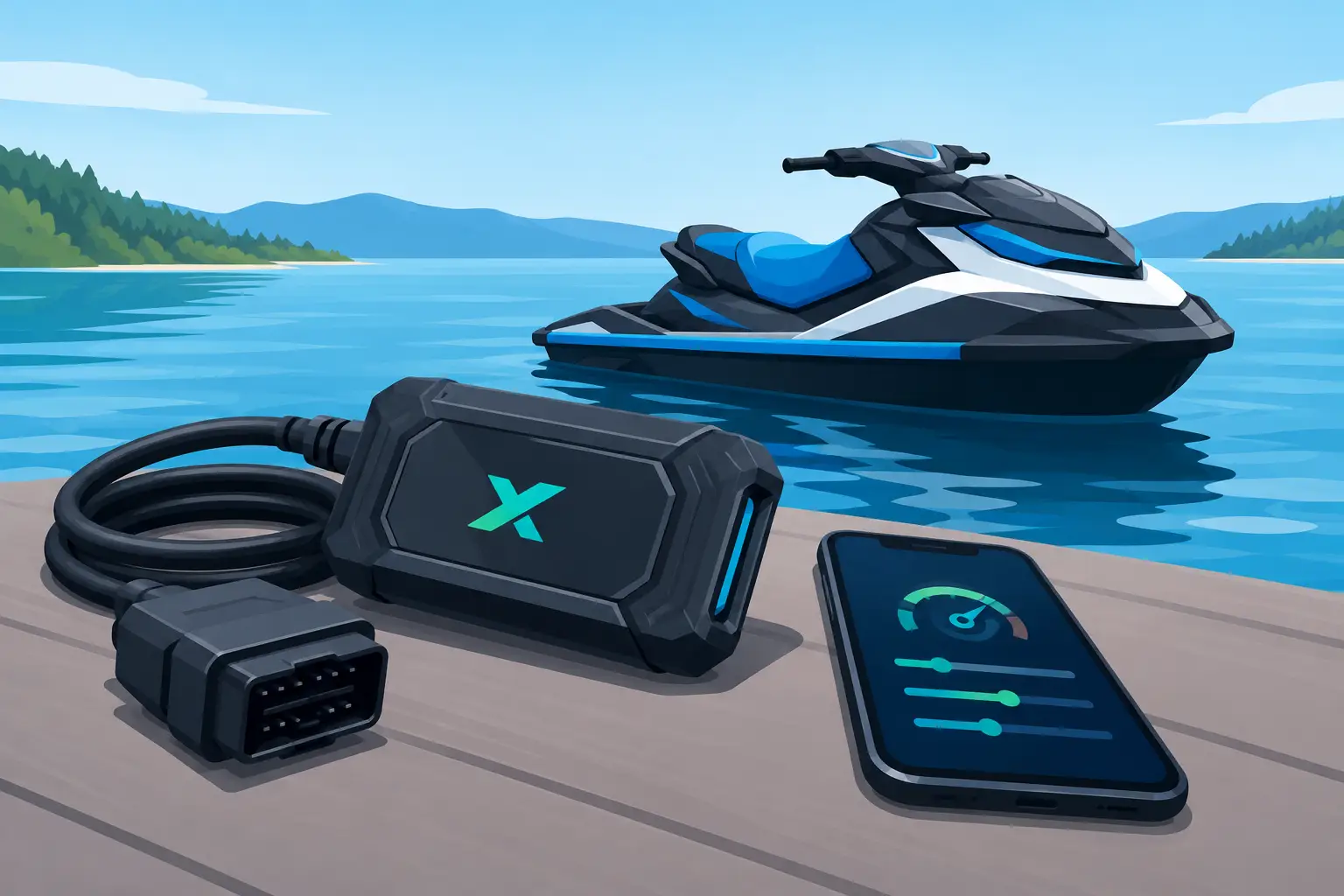
A supercharged Sea-Doo can feel seriously sharp with the right calibration, but a poor tune can turn a fast ski into an expensive workshop job. This MaptunerX tuning device review looks at where the device earns its reputation, what it cannot fix, and how to decide whether it suits your PWC and riding goals.
For owners who want more than a generic performance claim, the appeal is straightforward: MaptunerX gives supported Sea-Doo platforms a practical way to reflash the ECU with a proven calibration. The result can be stronger throttle response, higher RPM capability where the package supports it, and a tune matched to selected aftermarket hardware. The important word is matched. A tune is part of a complete package, not a shortcut around servicing, fuel quality or mechanical condition.
What the MaptunerX tuning device does
MaptunerX is a handheld ECU flashing device used with supported Sea-Doo models and compatible performance maps. It connects to the ski’s diagnostic port and allows the owner or workshop to read, flash and manage ECU calibration files without physically opening the ECU.
That matters because modern PWC ECU calibration controls far more than outright power. Depending on the model and map, it can affect throttle behaviour, rev limits, boost-related strategy, speed limiter settings, cooling and safety parameters, fault-code functions and the way the engine responds under load. A well-developed calibration can make a ski feel cleaner and more decisive through the mid-range rather than simply chasing a peak horsepower number.
The device itself is simple to use, but the decisions behind it should not be casual. The correct map depends on the exact engine platform, model year, intake and exhaust configuration, intercooler arrangement, supercharger setup, fuel used and intended RPM. Load the wrong calibration or ignore a supporting issue and the consequences can include detonation, overheating, belt or clutch issues, lean operation and premature engine wear.
MaptunerX tuning device review: the real benefits
The biggest strength of MaptunerX is that it makes a genuine ECU recalibration accessible without making every adjustment a major workshop exercise. For a supported Sea-Doo owner with a known, correctly assembled hardware package, it provides a tidy route to a purpose-built tune.
Better response where you use it
On the water, the change most riders notice first is throttle response. A suitable map can remove the flat, conservative feel that some factory calibrations carry, particularly on modified supercharged models. Acceleration can feel more immediate and the ski may carry stronger pull through the mid-range.
This is valuable for recreational riders as much as race-focused owners. A ski that responds predictably out of a corner, when towing a rider, or when accelerating through rough water is more enjoyable than one that only produces a bigger number on paper.
A cleaner path for staged upgrades
MaptunerX makes sense when upgrades are planned as a package. If you are fitting an intake, exhaust components, intercooler or supercharger upgrades, the ECU tune needs to recognise the engine’s changed airflow and operating demands. A matching calibration helps turn a collection of parts into a combination that works together.
It can also make future upgrades easier to manage. Rather than treating every change as separate, owners can work from a staged plan and choose maps appropriate to the final configuration. That is particularly useful for owners building a reliable fast recreational ski before moving towards more serious race hardware.
Useful diagnostic convenience
On compatible systems, the device can assist with reading and clearing fault codes and checking basic ECU information. It is not a replacement for full workshop diagnostics, pressure testing, compression testing or mechanical inspection. It is, however, useful for identifying whether an issue has logged a fault before the ski is loaded onto the trailer.
Where owners get caught out
The downside of a handheld tuning device is that it can make ECU tuning look easier than it really is. Flashing a map may take minutes. Confirming that the engine, fuel system, cooling system and driveline are ready for that map takes knowledge and proper checking.
A performance tune cannot repair a tired supercharger clutch, damaged wear ring, slipping belt, contaminated fuel, blocked intercooler, weak battery or a mechanical fault. In some cases, increased performance will expose an existing problem much faster. If a ski is already struggling to reach expected RPM or has warning lights, resolve that first.
Fuel is another non-negotiable. Many performance calibrations are designed around premium unleaded fuel and may require a particular octane rating. Australian fuel availability can vary between marinas, regional servos and metropolitan areas, so the tune needs to suit the fuel you can consistently use. Do not select an aggressive calibration designed for fuel you cannot reliably obtain.
Owners should also be realistic about speed claims. GPS speed can be affected by water conditions, rider weight, impeller setup, hull condition, fuel load and air temperature. A map that produces excellent results on a light ski in flat water may deliver a different outcome with a full tank, a passenger or chop. The objective should be repeatable performance and engine safety, not one optimistic top-speed pass.
Is MaptunerX right for your Sea-Doo?
MaptunerX is a strong option for owners of supported Sea-Doo models who have a clear hardware package and want access to established tuning options. It suits riders who service their ski properly, understand the need for correct fuel and want a controlled way to move through performance stages.
It is less suitable for anyone looking for a universal tuning tool across every Sea-Doo, Yamaha and Kawasaki platform. Compatibility is model-specific, so confirm the exact ski, year, ECU and proposed tune before purchasing. It is also not the right first purchase for a ski with unknown service history or unresolved mechanical symptoms.
For a standard, healthy recreational ski, a conservative tune may be all that is needed to improve response while retaining a sensible reliability margin. For a modified supercharged build, device selection should follow a proper plan that includes airflow, charge-air cooling, impeller choice, supercharger condition, engine internals where required and the target RPM range.
Before flashing a map
Treat the flash as the final step in preparation, not the first. Start with a current service baseline: fresh oil and filters where applicable, sound spark plugs, a healthy battery, correct coolant level, clean intercooler passages and no leaks. Check that the supercharger and driveline components are within specification, particularly on high-hour or modified skis.
Confirm every fitted part against the map requirements. An intake-only calibration is not automatically suitable for a ski with a different intercooler, exhaust system or supercharger wheel. Keep a written record of the original tune, installed components, fuel used and any changes made. That record saves time if the ski needs diagnosis later.
During the flash, use a fully charged battery and follow the device instructions exactly. Do not interrupt power, disconnect the device or attempt the process while the ski has electrical faults. Once the map is installed, check for fault codes, complete any required on-water procedure and monitor how the ski behaves under load.
Workshop support still matters
Remote flashing is convenient, but the best results come from pairing it with qualified mechanical support. A specialist can assess whether the tune is appropriate for the ski, inspect supporting components and investigate issues that ECU data alone cannot explain.
This is especially relevant for owners running higher boost, aggressive impeller combinations or race-oriented hardware. At that level, tuning, cooling, fuel delivery and engine durability all affect each other. Saving money by skipping checks can become far more costly than getting the package inspected before its first hard run.
For Central Coast riders, VTECHTUNED can help turn a proposed MaptunerX setup into a complete, reliable performance package rather than a guess made from a parts list.
Verdict: a capable device, not a magic button
MaptunerX is a worthwhile tuning device for the right supported Sea-Doo and the right owner. Its value is not simply that it can add performance. Its value is that it allows ECU calibration to match a considered upgrade path, giving sharper response and stronger usable power when the rest of the ski is prepared correctly.
Buy it with a plan, choose the map around your exact setup and fuel, and keep maintenance ahead of modification. That approach gives you the performance you feel every time you squeeze the throttle, without sacrificing the reliability that keeps your ski on the water.



