
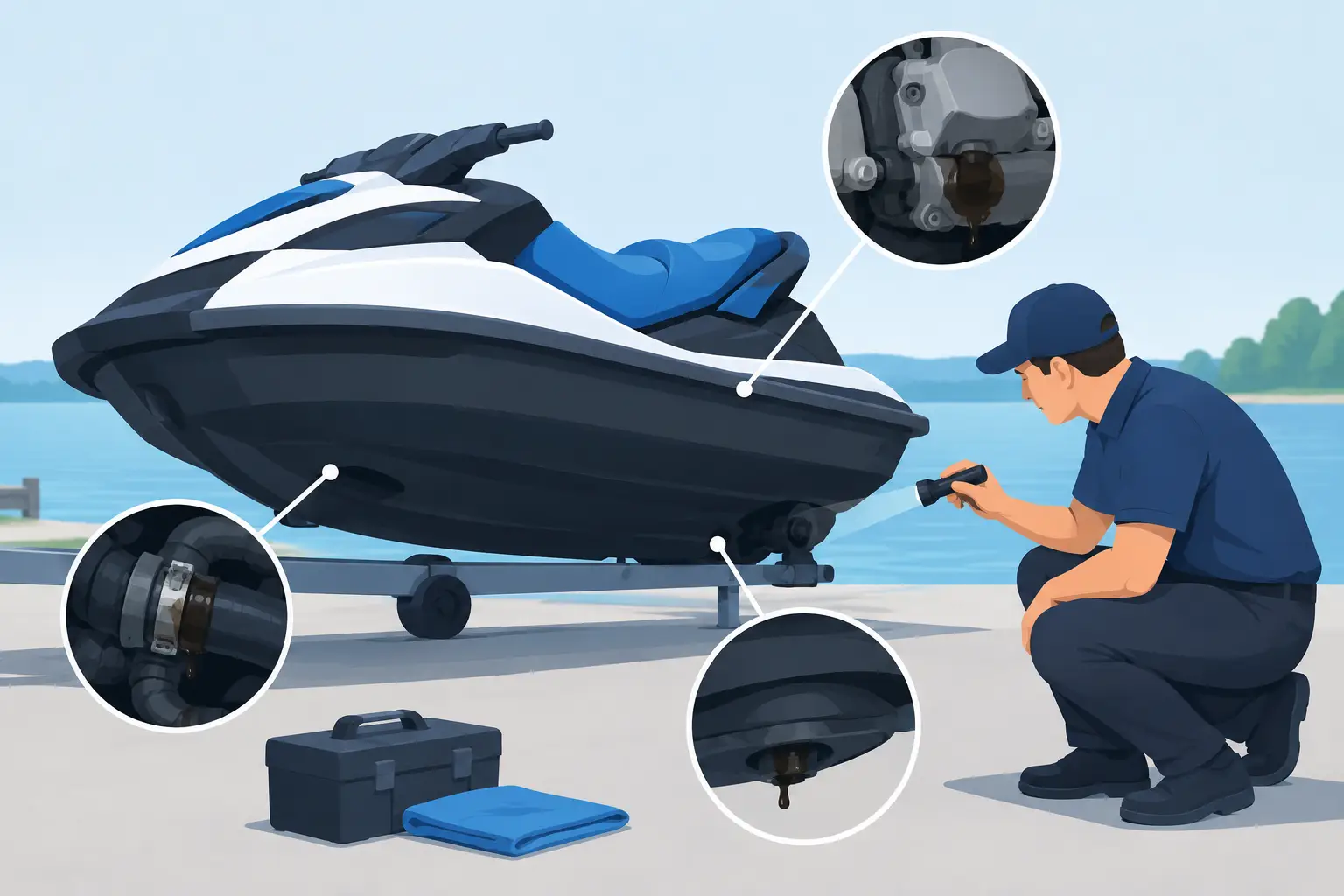
A small pool of oil in the hull is never something to brush off as normal PWC mess. Checking PWC oil leaks before they become a bigger failure can protect expensive engine internals, keep the bilge clean and prevent a ride day ending with a tow back to the ramp.
The challenge is that oil can travel. A leak high on the engine may collect low in the hull, while water spray and vibration can spread it across hoses, mounts and the intake area. Finding oil is the starting point, not the diagnosis. A proper inspection identifies the fluid, traces its source and determines whether the ski is safe to run.
Start by Identifying What Is Actually Leaking
Not every dark or slippery residue inside a PWC is engine oil. Four-stroke Sea-Doo, Yamaha and Kawasaki models use engine oil, but the appearance and location of a leak will vary significantly between platforms. Older two-stroke machines may also have oil-injection tanks, supply lines and fittings that require their own checks.
Engine oil is usually amber to dark brown or black, depending on service age. It feels slick, has a distinct petroleum smell and may leave a film in the bottom of the hull. Fresh oil can look surprisingly clean, so do not assume clear fluid is water alone. Fuel, coolant, grease, intercooler residue and even contaminated bilge water can be mistaken for an oil leak.
Before removing parts or adding fluid, clean the affected area thoroughly. Use suitable marine degreaser, rinse carefully where appropriate and dry the hull. Then place clean absorbent material beneath the suspected area. After a short idle run on the correct flush setup, or after a controlled on-water test, fresh traces can point to the actual source.
Do not run the engine for extended periods on the hose just to hunt a leak. Follow the manufacturer’s flushing procedure, including water-on and water-off sequence. A leak that only appears under load, at operating temperature or when the hull is moving may need workshop diagnosis.
Checking PWC Oil Leaks Around Common Failure Points
A methodical check beats guessing. Begin at the top of the engine and work down, because gravity often hides the source beneath the mess.
Oil filter, cap and service points
The oil filter and its seal are common areas to inspect after a recent service. A filter fitted dry, cross-threaded or not tightened correctly can seep quickly once oil pressure builds. Check for oil around the filter body, mounting face and nearby engine casting.
Also inspect the oil filler cap, dipstick or level-checking point, depending on the model. A damaged O-ring, loose cap or overfilled crankcase can push oil out where it should remain sealed. Overfilling is not harmless on a PWC. It can aerate oil, increase crankcase pressure and create leaks that appear unrelated.
If the ski has recently been serviced, do not assume the filter is the culprit. A pre-existing leak may simply be more obvious after fresh, clean oil has been added. The right approach is to inspect, confirm and correct the source rather than tightening every fastener in sight.
Rocker cover and breather system
Oil around the upper section of a four-stroke engine often points to a rocker cover gasket, breather hose or breather fitting. Heat cycles, vibration and incorrect previous assembly can allow these seals to weep.
Breather-related faults deserve attention, particularly on supercharged or modified engines. Excessive crankcase pressure can force oil through hoses and seals, while oil entering the intake tract can affect combustion quality and leave residue through the intake system. The cause may be a simple hose issue, but it can also indicate a larger ventilation or engine-condition problem.
Oil cooler, lines and fittings
Where fitted, inspect oil cooler connections, oil lines and fittings for wetness, staining or damaged hose coverings. Hoses can rub against brackets, engine components or hull fittings over time. A small abrasion may look minor until pressure and temperature turn it into a serious leak.
Look for hard, cracked or swollen hose sections, loose clamps and fittings with oil collecting around their base. Never overtighten fittings to stop a leak. Damaged threads, crushed seals and distorted hose ends can make the repair more difficult and more expensive.
Sump, drain hardware and lower engine area
Oil gathering beneath the engine can come from the sump, drain plug, drain hose or lower sealing surfaces. These areas are harder to inspect in a confined hull, and access limitations are one reason an apparent minor leak should not be ignored.
If an oil change has been performed recently, check any drain connection carefully. A washer, O-ring or hose fitting that is not seated correctly may seep only once the engine is hot. Oil in the lowest part of the hull may also have migrated from above, so inspect the upper engine before condemning a sump seal.
Oil-injection components on two-stroke PWCs
For two-stroke owners, inspect the oil tank, cap, feed lines, fittings and pump area. Ageing oil lines can harden, become brittle or loosen at their connections. Oil injection faults are especially serious because an external leak can be paired with a supply problem to the engine.
Do not replace a line and assume the system is ready to ride. Depending on the platform and work carried out, the oil-injection system may need correct bleeding and verification. An air pocket or incorrect routing can risk lubrication failure.
Check the Oil Level Before You Ride Again
A leak tells only half the story. The other question is how much oil the engine has lost. Check the oil level using the manufacturer’s stated procedure, as PWC oil-level readings can be affected by engine temperature, run time and whether the craft is level.
Do not simply top up and keep riding. If the level is below specification, there is a reason. Adding oil may conceal the rate of loss while the leak continues into the hull. Too much oil can be just as damaging as too little, particularly on engines that are sensitive to crankcase pressure and oil aeration.
Watch for warning signs beyond the visible leak: oil-pressure alarms, smoke, a burning-oil smell, rough running, unusual mechanical noise or fresh oil contamination around the driveline. Any of these symptoms raises the urgency.
When a Leak Means Stop Riding
Some seepage around an ageing gasket may not immediately leave oil on the bilge floor, but it still needs to be monitored and repaired properly. Other faults warrant stopping straight away.
Do not ride the PWC if oil is actively dripping, the oil level is dropping, an oil warning appears, oil is reaching belts or electrical components, or there is evidence of contamination in the intake or engine bay. A supercharged engine adds another layer of risk because belt-driven components, high temperatures and increased cylinder pressures leave little margin for neglected maintenance.
Oil in the bilge also creates an environmental issue. Never launch a ski known to be leaking oil into the water. Clean the hull with absorbent material, dispose of contaminated waste correctly and repair the fault before returning to the ramp.
Why Performance PWCs Need Closer Attention
A standard recreational ski and a tuned, supercharged or race-oriented build do not place the same demand on hoses, seals and engine ventilation. Higher boost, aggressive riding, sustained rpm and extra heat can expose weak components quickly. That does not mean every modified PWC leaks oil. It means inspection quality and servicing intervals matter more.
For performance machines, include a visual oil-leak inspection before major ride days and after any engine, supercharger, intercooler or tuning work. Check fasteners and hoses only to the correct specification, and keep service records showing oil type, quantity and date. Those details make diagnosing a change much faster.
A workshop should also consider the broader picture: engine condition, crankcase ventilation, oil pressure, recent service work and the specific platform’s known weak points. Replacing a gasket without finding why it failed can turn a short-term fix into repeat downtime.
If you can see oil in the hull, treat it as useful evidence rather than a nuisance to wipe away. Clean it, trace it and repair the source before the next hard run. For Central Coast owners dealing with a persistent leak, VTECHTUNED can inspect the system properly and help keep the ski built for speed and reliability.



