
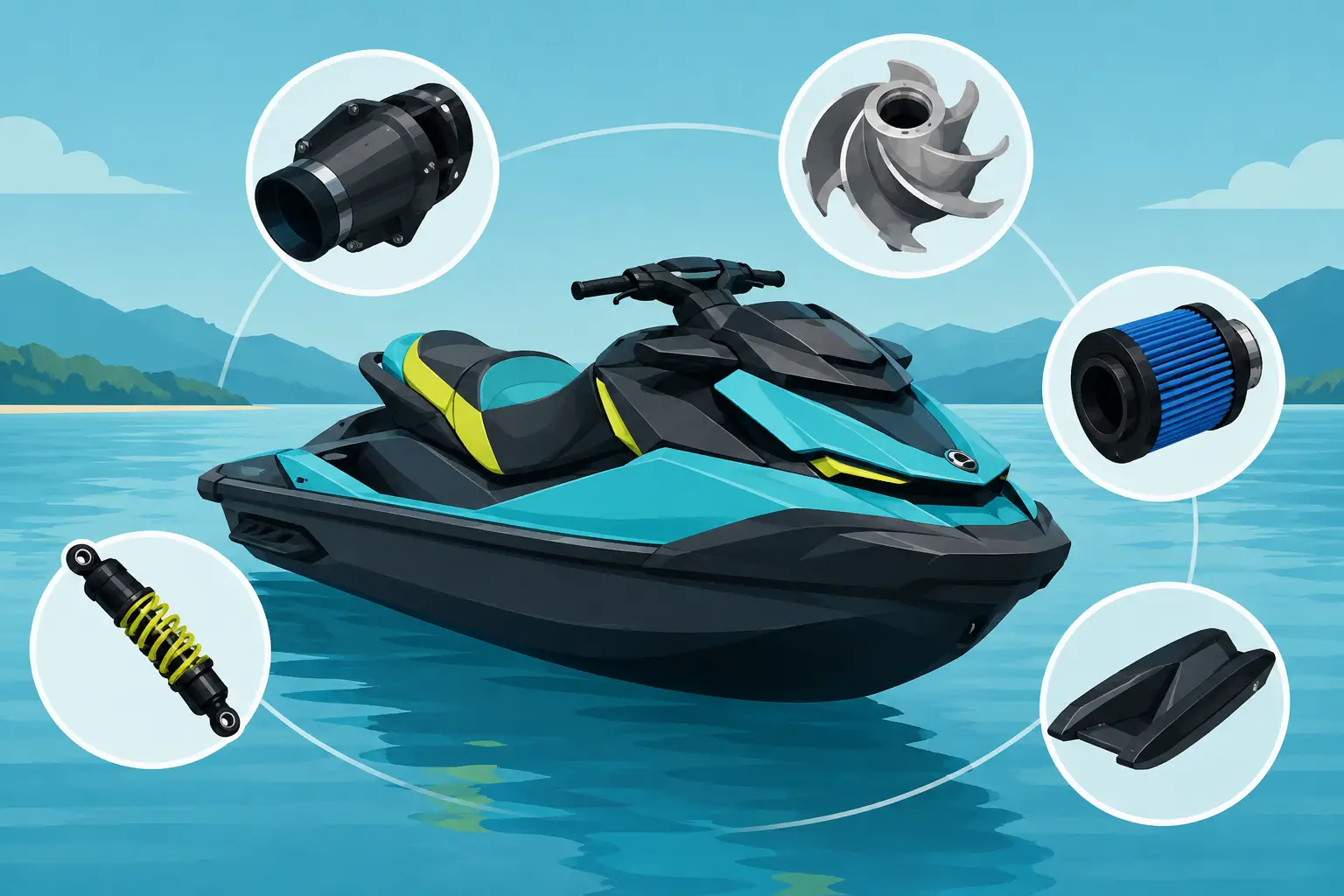
A Sea-Doo 1630 platform responds brilliantly to the right parts, but the best Sea-Doo 1630 upgrades are never just the parts with the biggest advertised numbers. A ski that launches hard, holds consistent power through a full session and returns to the trailer without drama is the real goal. That takes a matched combination of calibration, airflow, cooling, fuel delivery and driveline setup.
The 1630 ACE engine is fitted across several Sea-Doo models and specifications, including naturally aspirated and supercharged applications. That matters. The best path for an RXP-X or RXT-X 325 is not automatically the right path for a GTX 170, and a race-focused build has very different priorities to a family ski used on Brisbane Water or offshore on a calm morning. Start with the exact model, its current condition and how you actually ride it.
Start with a Healthy Baseline
Before adding power, make sure the machine is earning it. A performance upgrade cannot fix a tired supercharger, contaminated fuel system, worn wear ring, weak battery, leaking intercooler or overdue servicing. It can make those problems more expensive.
A proper baseline inspection should cover fault codes, compression and leak-down where needed, oil condition, cooling system integrity, supercharger condition, intercooler hoses, clamps, carbon seal and driveline wear. On a supercharged 1630, service history is particularly important. Boost and revs place extra demand on components that may have been perfectly adequate for standard use.
This is also the time to assess the hull and pump. A damaged ride plate, bent intake grate, poor impeller clearance or worn wear ring can cost acceleration and top speed before the engine has even had a chance to work. Diagnosing the whole ski first gives every later upgrade a better result.
Best Sea-Doo 1630 Upgrades, in the Right Order
ECU tuning: the best first move on many skis
For many supercharged 1630 owners, ECU tuning delivers the most noticeable gain per dollar when it is calibrated for the ski’s hardware and intended fuel. A well-developed tune can improve throttle response, adjust boost and RPM strategies, revise torque management and optimise fuel and ignition targets. The result should feel sharper and stronger through the mid-range, not simply more aggressive for the first second of throttle.
The important word is calibrated. Generic files and cheap flash tools leave too much on the table and can create reliability issues when they do not account for local fuel quality, ambient temperature, intake setup and supporting modifications. Australian summer conditions can expose a marginal tune very quickly.
A tuned ski also needs the right fuel every time. If a calibration is designed around premium fuel, treating that requirement as optional is a fast way to invite detonation and engine damage. Choose a realistic tune for the fuel you can consistently access, not the most ambitious number on a screen.
Supercharger upgrades for serious acceleration
On boosted 1630 models, a supercharger upgrade is where a mild performance package becomes a serious build. More airflow and boost can transform acceleration, particularly when paired with an ECU calibration, appropriate intake flow and adequate cooling. It is a proven route to strong recreational and competition performance.
It is not a bolt-on shortcut, though. More boost produces more heat and places greater load on the fuel system, intercooler, engine internals and driveline. A supercharger setup must be selected around the desired RPM, fuel type and the rest of the package. Overspinning a charger or chasing boost without monitoring supporting systems is not precision performance.
For riders wanting fast, reliable lake and coastal use, a conservative charger and tune package is often the smarter choice than the biggest available wheel. For dedicated drag or closed-course use, the parts list can move quickly towards upgraded valvetrain, fuel components, engine internals and more intensive maintenance intervals.
Intercooler and cooling upgrades protect power
Heat is one of the biggest enemies of consistent performance in a supercharged PWC. After several hard pulls, intake temperatures rise, the ECU may reduce power, and a ski that felt sharp at launch can become less consistent. An upgraded intercooler helps reduce intake air temperatures and gives a tuned engine a more stable environment to make power.
This upgrade makes particular sense for higher-boost builds, heavy riders, hot-weather riding and skis that spend long periods at wide-open throttle. Quality hose routing, secure clamps and careful pressure testing matter as much as the core itself. A boost leak or loose connection can turn a good weekend into a recovery job.
Cooling modifications should be approached with the same care. More cooling is not automatically better if the system design, water flow or operating temperatures are compromised. Select components as part of a package and have them installed cleanly.
Intake and exhaust: support the tune, do not chase noise
A freer-flowing intake can support a tuned 1630 by reducing restriction and improving the quality of air entering the engine. The gains are usually strongest when the intake is matched to ECU calibration and boost level. It should also be installed with attention to water exposure, secure mounting and service access.
Exhaust changes can alter sound, back pressure and flow, but they need more thought than many owners expect. A louder ski is not necessarily a faster ski, and excessive noise can make a great machine unpleasant to ride or attract the wrong attention at the ramp. Consider local rules, where you ride and whether the system is suitable for your model before committing.
Fuel system upgrades for higher-power packages
Once boost and airflow move beyond a mild setup, fuelling capacity becomes a hard limit. Larger injectors, fuel pump upgrades and supporting fuel hardware may be required to maintain safe air-fuel ratios under load. These parts are not glamour upgrades, but they are essential when the engine’s fuel demand rises.
Never fit fuel system parts based on a guess. Injector data, pressure behaviour and ECU calibration must agree. A lean condition at high boost can damage pistons and valves far faster than most riders realise. This is specialist work, not a job for mixing unmatched parts in the shed.
Pump, impeller and wear ring work puts power in the water
Engine power only matters if the pump can convert it into forward drive. A correctly selected impeller can improve hole shot, reduce cavitation, sharpen mid-range pull or help a ski carry RPM at top speed. The right pitch depends on power level, rider load, hull, riding conditions and target use.
A recreational ski used with passengers may benefit from a different impeller choice to a lightweight race ski. Too much pitch can pull RPM down and make the engine feel lazy. Too little pitch can allow the engine to over-rev and sacrifice efficiency. Pump blueprinting and a quality wear ring can also deliver gains that are felt every time you hit the throttle, especially on a ski with existing wear.
When Internal Engine Upgrades Make Sense
Forged pistons, rods, head studs, upgraded valve springs and camshafts are not essential for every Sea-Doo 1630 build. For a sensible tune and supporting bolt-ons, a healthy standard engine may be entirely appropriate. Internal work becomes relevant when power targets, boost, RPM or competition use move beyond the comfort zone of factory components.
This is where planning matters most. An engine build should begin with a target, not a shopping list. A workshop can match compression, camshaft profile, valve control, fuelling, supercharger selection and calibration to the desired use. The result is a package built for repeatable performance, rather than an expensive collection of parts with conflicting demands.
Internal upgrades also bring a commitment to maintenance. Race-oriented combinations need more frequent inspection, more careful warm-up procedures and honest monitoring of hours and performance. That is the trade-off for running harder.
Build for Your Riding, Not Someone Else’s Dyno Sheet
The strongest 1630 package is the one that suits your ski and keeps delivering. A recreational owner may be best served by a health check, ECU tune, intake, intercooler and pump setup. An enthusiast chasing aggressive acceleration may add supercharger and fuel-system work. A racer may need a fully engineered engine, driveline and cooling package with a maintenance plan to match.
Keep warranty, insurance and operational requirements in mind before modifying. Significant performance work can affect cover, registration obligations and compliance expectations. Be upfront with your insurer and choose reputable parts and professional installation rather than creating problems that surface when you need support.
At VTECHTUNED, the focus is not simply fitting parts. It is assessing the complete package, carrying out the work to a high standard and ensuring the ski has the tuning and supporting hardware needed to perform reliably. If your 1630 is ready for more, start with a clear goal and build it properly from there.



