
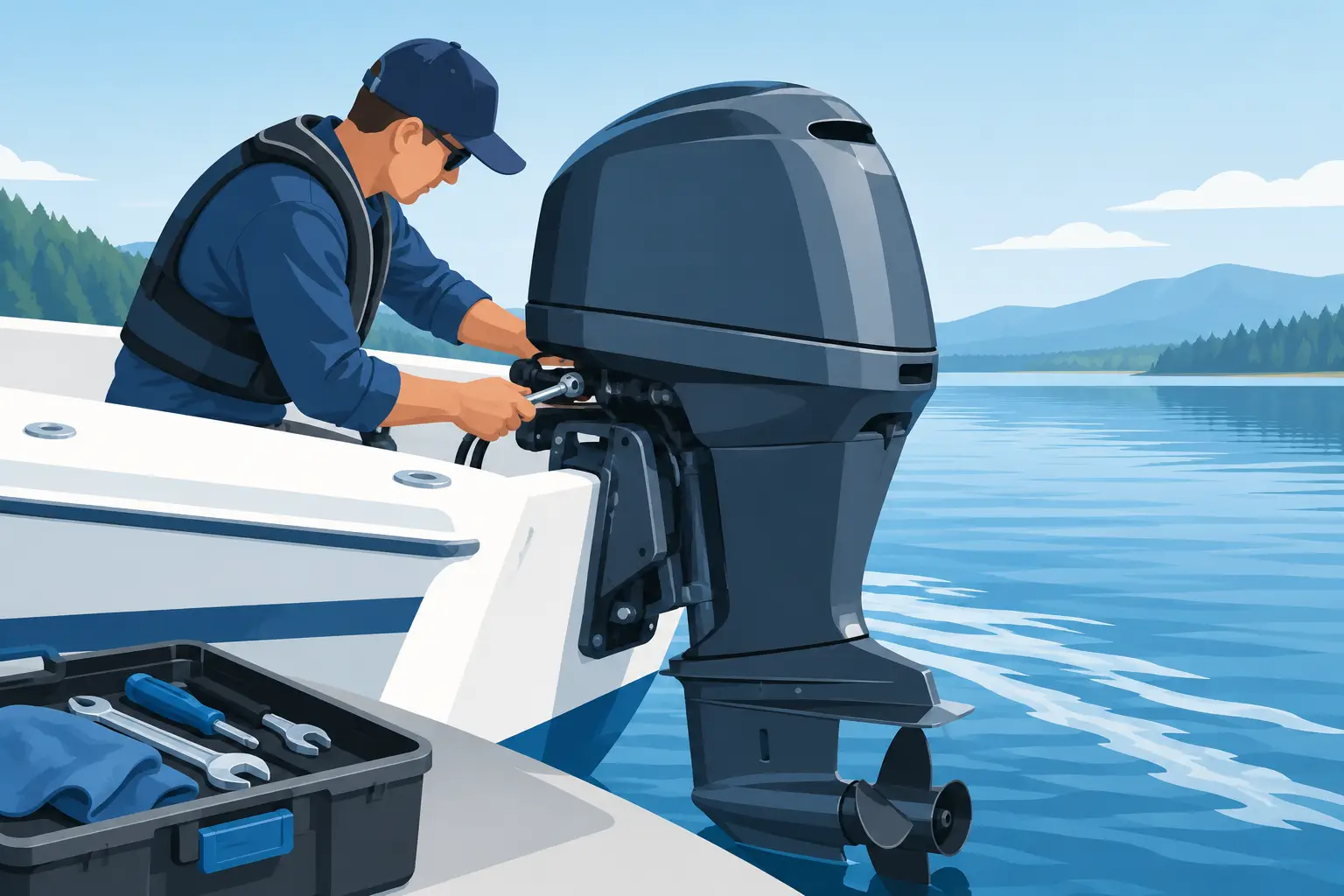
A boat that feels lazy out of the hole, falls off the plane with a full crew, or hits the limiter too early is telling you something. Outboard motor tuning can improve throttle response, mid-range pull and overall driveability, but only when it is treated as a complete marine performance job – not a file loaded into an ECU and a promise of more horsepower.
The best result is not simply the biggest peak number. It is an outboard that carries the correct propeller load, runs cleanly at operating temperature, delivers predictable power in changing conditions and remains reliable after a long day on the water. That takes proper diagnosis, sound mechanical condition and a calibration matched to the way the boat is actually used.
What Outboard Motor Tuning Actually Changes
On compatible electronic fuel-injected outboards, tuning may adjust fuel delivery, ignition timing, throttle mapping, rev limits and, in some applications, torque or protection strategies. The aim is to make the engine’s calibration suit its fuel quality, intake and exhaust configuration, propeller load and intended operating range.
A conservative calibration can often make an engine feel sharper without chasing an aggressive peak-power figure. Throttle response may improve, the mid-range can feel stronger and the engine may hold load more confidently when the boat is carrying passengers, gear or a full tank. For anglers, skiers and performance boat owners, that usable pull matters far more than a number that only appears at wide-open throttle.
Not every outboard can or should be tuned. Some ECUs have limited tuning access, while others are tightly integrated with factory diagnostics, emissions systems and protection logic. Carburetted engines follow a different path again, usually involving jetting, timing, reed condition and fuel-system setup rather than software calibration. A specialist should establish what is possible on your specific engine before any work begins.
Start With Engine Health, Not a Tune File
A tune cannot repair low compression, contaminated fuel, a weak fuel pump, blocked injectors or an overheating issue. In fact, extra load and cylinder pressure can expose those faults faster. This is why a quality tuning process starts with inspection and data, not a laptop.
Compression and, where appropriate, leak-down results provide a baseline for the powerhead. Fuel pressure, injector performance, spark plugs, cooling water flow, gearbox oil condition and fault codes also matter. An engine with inconsistent cylinder health will not respond evenly to calibration changes, and forcing it harder is an expensive way to find the problem.
Cooling deserves particular attention in saltwater use. A partly restricted water passage, tired impeller or faulty temperature sensor can trigger protection strategies or cause genuine heat stress. The same applies to poor electrical connections. Marine engines live with vibration, heat and corrosion, so a clean connector and sound earth can be just as valuable as a performance part.
For older engines, the service history often determines the sensible path. If the outboard is overdue for plugs, filters, gearbox oil, water-pump servicing or injector cleaning, complete that work first. A maintained engine gives the tuner reliable information and gives the owner a much better chance of keeping the result.
Propeller Setup Is Part of the Calibration
A motor can be mechanically healthy and electronically well tuned, then still perform poorly because the propeller is wrong. Propeller pitch, diameter, blade design and ventilation all change the load the engine sees. Get that load wrong and the tune cannot deliver its intended result.
An over-pitched propeller may feel strong at first but prevent the engine from reaching its recommended wide-open-throttle range. That loads the motor heavily and can make a boat sluggish out of the hole. An under-pitched propeller can let the engine over-rev, hurt top-end efficiency and waste the added power you paid for.
Engine height and hull setup matter too. If the motor is mounted too low, drag increases. Too high, and the propeller may ventilate in turns or rough water. Trim response, cavitation plate position and weight distribution all influence how the boat carries itself. This is why meaningful testing happens on the water, under normal load, rather than solely on a workshop stand.
A proper test should consider more than top speed. Record RPM, GPS speed, water conditions, fuel load and passenger weight. Then assess how the boat launches, holds plane, corners and responds to trim. A setup that is excellent for one driver running light may be poor for a family boat loaded with an esky, fishing gear and four people.
Fuel Quality Sets the Safe Limit
Marine tuning has to account for the fuel that will genuinely be used after the job is complete. If a calibration relies on premium unleaded, the owner needs to use premium unleaded every time. A high-timing tune and inconsistent fuel quality are not a sensible combination, particularly on hot summer days when the boat is working hard.
Detonation is the risk nobody wants to discover late. It can damage pistons, rings and bearings, sometimes without obvious warning at the controls. Modern engines may have knock sensing and protective strategies, but those systems are not an excuse to run an unsuitable calibration or poor fuel.
Be honest about how and where you operate. A river boat that sees short wide-open-throttle runs has different demands from an offshore rig that carries weight and works continuously in rough water. The right tune depends on that duty cycle, not a generic claim of maximum power.
Sensible Gains Beat Aggressive Claims
The strongest performance package is built around a clear objective. Do you need faster holeshot for towing? Better mid-range to carry a loaded hull? A propeller change that brings RPM into range? Or a race-focused setup with a shorter service interval and tighter operating requirements?
Those are different jobs. A recreational owner generally benefits from a safe, smooth calibration and correct propeller selection. A competition application may accept higher maintenance, more frequent checks and narrower fuel requirements in exchange for maximum output. Neither approach is automatically better. The mistake is using a race-minded tune on a boat that needs to start, idle, troll and run reliably every weekend.
Be wary of any tuning offer that guarantees a precise horsepower gain without inspecting the engine or discussing setup. Results vary with model, existing condition, propeller load, fuel, altitude, weather and hull design. A professional tuner explains the expected benefit, the limitations and the maintenance required after the work.
Protect Reliability After the Tune
Once an outboard has been tuned, maintenance becomes even more important because the engine may be operating closer to its performance limit. Keep up with the manufacturer’s service schedule, inspect the propeller for damage, monitor water pressure and temperature where instrumentation allows, and pay attention to any change in starting, idle quality or wide-open-throttle RPM.
After the first few runs, check for loose fasteners, fuel seepage, water leaks and warning codes. If the boat suddenly gains or loses RPM, do not assume the tune has changed. A spun prop hub, damaged blade, fouled hull, water in the fuel or cooling issue can all alter performance.
Owners should also consider warranty, insurance and local compliance before modifying an engine. Changes can affect manufacturer support, policy conditions, emissions compliance or noise requirements. Getting clear advice before work starts is easier than trying to explain an undeclared modification after a failure or claim.
For Central Coast owners who use their boats hard, a specialist assessment can separate a genuine tuning opportunity from a basic service or setup fault. VTECHTUNED approaches performance work with the same priority it brings to high-output marine builds: measure the engine, match the hardware, test the result and protect reliability.
The next time your outboard feels flat, start with the numbers – compression, fuel delivery, RPM and propeller load. That information will point to the right fix, whether it is a service item, a propeller change or a carefully developed calibration that makes every throttle input count.



