
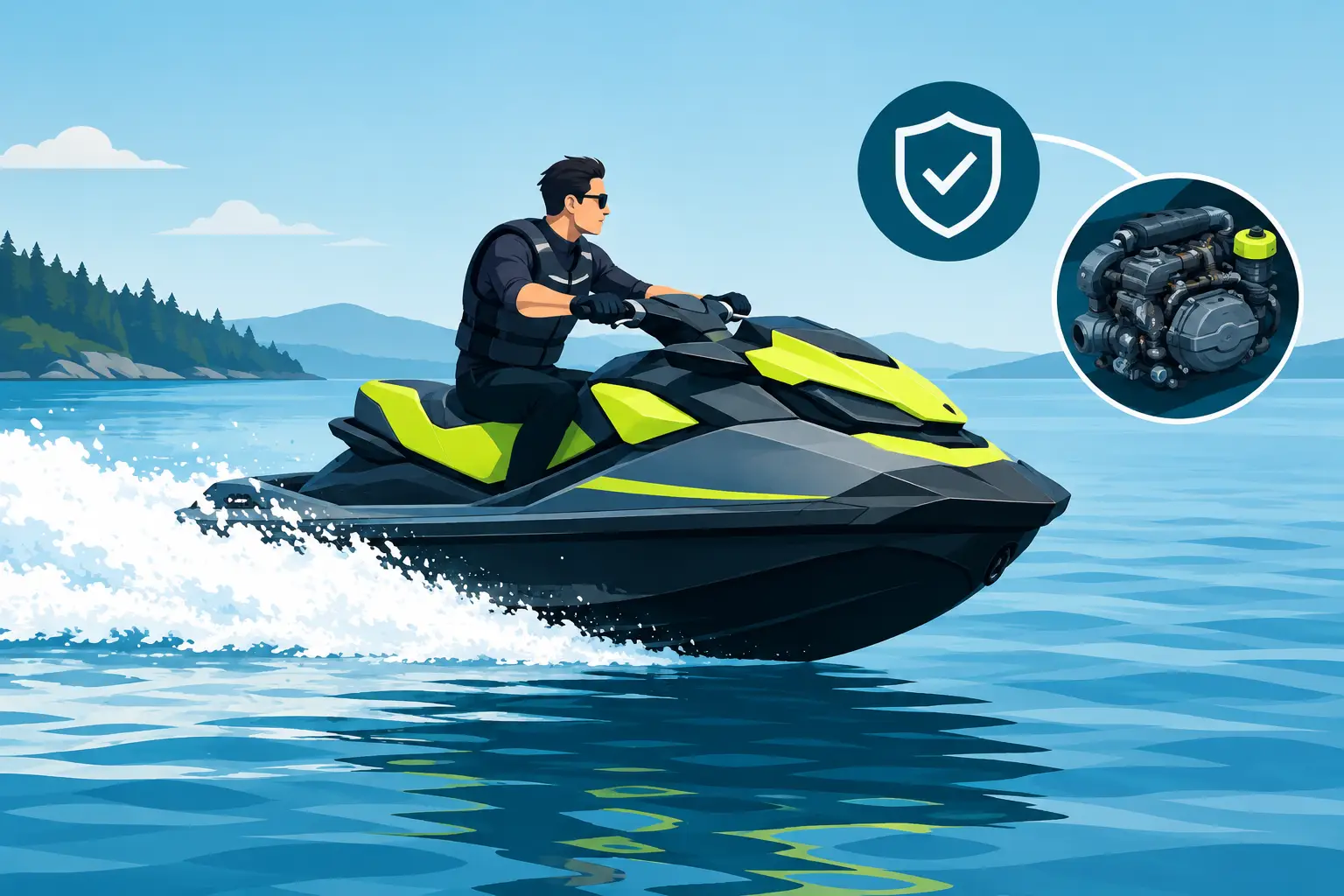
A strong Sea-Doo should feel sharper after tuning, not temperamental. Real Sea-Doo tune reliability is not about chasing the biggest dyno number or a one-off top-speed pass. It is about consistent throttle response, safe air-fuel control, stable engine temperatures and a ski that can be ridden hard without creating a new workshop problem every second weekend.
That distinction matters. A calibration that feels brilliant for five minutes but detonates under sustained load, heat-soaks after repeated pulls or exposes a weak fuel system is not a reliable performance upgrade. The best tune is matched to the exact model, its current hardware, the fuel available and how the owner actually rides.
What Sea-Doo Tune Reliability Really Means
For a recreational owner, reliability may mean a crisp ski that starts cleanly, idles properly and pulls hard with the family on board. For an enthusiast or racer, it can mean predictable power through repeated launches, stable boost and temperatures that remain under control during a full day on the water.
In both cases, reliability starts with a conservative, accurate calibration. ECU tuning changes the way the engine responds to throttle input, boost targets, ignition timing, fuelling, rev limits and safety strategies. Those changes can produce a major improvement in power and response, particularly on supercharged Sea-Doo platforms. They also reduce the margin for poor maintenance, bad fuel or unsuitable supporting parts if the tune is aggressive or poorly matched.
The goal is not to remove every factory protection for the sake of a bigger number. Factory strategies exist for a reason. A professional tune considers where limits can be safely adjusted and where protection should remain in place to protect an expensive engine.
The Tune Must Match the Hardware
A tune written for a largely stock Sea-Doo is not automatically suitable once the ski has a freer-flowing intake, exhaust changes, upgraded intercooler, supercharger work or fuel-system modifications. Each part alters airflow, charge temperatures, boost behaviour or fuel demand. Calibration needs to follow the package, not lag behind it.
This is where many reliability issues begin. Owners sometimes fit performance parts over time, load a generic file and assume the ECU will correct everything. Modern engine management has useful compensation strategies, but it cannot overcome a mechanical mismatch, insufficient fuel supply or an intake leak at high boost.
Supercharged engines are especially sensitive. More boost generates more heat, and hotter intake air increases the risk of knock. An intercooler that is too small, blocked by debris or leaking can turn a safe-looking setup into a problem under sustained throttle. The same applies to a supercharger that is not built or serviced to suit the target boost level.
A reliable package treats the engine, supercharger, cooling system, fuel system and ECU calibration as one system. If one component is overlooked, it becomes the weak point.
Fuel Quality Is Not Negotiable
Australian fuel quality can vary between locations and storage conditions matter. A tune designed around premium unleaded needs premium unleaded every time. Filling with lower-octane fuel because the preferred bowser is unavailable is an expensive gamble, particularly in a boosted Sea-Doo running increased timing or boost.
Fuel that has sat in the tank for months can also cause trouble. Water contamination, stale fuel and restricted filters affect combustion quality and fuel delivery. If a ski is used seasonally or stored for extended periods, fuel management should be part of the maintenance plan, not an afterthought before the next ride.
For high-output builds, injectors, pump capacity and fuel pressure must be verified rather than assumed. A tune cannot compensate for fuel volume that simply is not there at wide-open throttle.
Cooling and Heat Control Decide How Long It Lasts
A Sea-Doo may feel perfect during a quick test run, then show its weaknesses after repeated hard acceleration, towing or hot summer riding. Heat is often the difference.
High intake-air temperatures, restricted cooling passages, a compromised intercooler circuit or a worn carbon seal can all affect performance and durability. Saltwater use adds another layer of risk, as corrosion and debris can reduce cooling efficiency over time. A proper inspection looks beyond the scan tool and checks the physical condition of hoses, clamps, cooling components and the pump system.
Riders should also understand that hard riding in shallow water, weed-heavy areas or very warm conditions places more stress on the ski. The tune may be sound, but the operating environment still matters. A reliable setup is one that has enough headroom for the conditions, not just the ideal test day.
Why Generic Files Can Be a Reliability Gamble
Remote tuning can be a practical option when it is supported by accurate information, the correct hardware and proper communication. But a copied file with unknown origins is not the same thing as a calibration developed for your setup.
Two Sea-Doos with the same model badge can have different service histories, sensor condition, intake modifications and fuel-system health. One may respond exactly as expected. The other may have a weak coil, an air leak, low fuel pressure or early signs of supercharger wear. Loading a more aggressive tune onto the second ski does not fix those faults. It makes them harder and more expensive to ignore.
Before tuning, a serious workshop should establish a baseline. That means checking fault codes, service history, compression where appropriate, supercharger condition, oil and coolant condition, battery voltage, fuel delivery and any signs of water ingress or exhaust leaks. Diagnostics are not a delay to the fun part. They are how you avoid tuning around an existing mechanical fault.
Maintenance Is Part of the Calibration Package
Once a Sea-Doo is tuned, service intervals and inspection standards need to reflect the extra load. This does not mean a properly tuned ski is fragile. It means performance ownership requires discipline.
Pay attention to spark plugs, oil condition, intercooler hoses and clamps, fuel filters, supercharger servicing, wear-ring condition and the pump. A damaged impeller or worn wear ring may not hurt the engine directly, but it can make the ski feel slower, increase cavitation and lead owners to chase a tuning issue that does not exist.
After saltwater use, flushing and rinsing are basic protection. So is checking the engine bay for loose clamps, oil residue, water leaks and rubbing hoses. Small issues are much cheaper to correct before they become a lean condition, cooling failure or belt-related problem.
For heavily modified or race-oriented skis, data review is valuable. Looking at engine parameters after changes or hard use helps identify trends before they become failures. The exact checks depend on the platform and tune, but the principle is simple: listen to the data, not just the seat-of-the-pants feeling.
Choosing the Right Reliability Level for Your Riding
Not every owner needs the same tune. A weekend cruiser who wants stronger mid-range and better throttle response may be better served by a dependable Stage 1-style calibration with sensible limits than by an all-out race file. That ski will usually be easier to fuel, less sensitive to heat and more enjoyable across a long day.
A rider building for drag racing, closed-course competition or serious offshore performance may accept tighter maintenance intervals and more frequent component checks in exchange for greater output. There is nothing wrong with that approach, provided the build is honest about its purpose. Race-level power has race-level demands.
The problem comes when a rider expects a high-boost, high-rpm setup to have the same operating margin as a near-stock recreational ski. It may be fast, but it is not the same package and should not be maintained like one.
At VTECHTUNED, the focus is matching the tune and supporting hardware to the way the ski will be used, then backing it with proper diagnostics and workshop standards. That is how performance gains stay repeatable rather than becoming a string of costly repairs.
Signs Your Tuned Sea-Doo Needs Attention
Do not keep riding through a change in behaviour just because the ski still runs. A sudden loss of top speed, new cavitation, erratic idle, hesitation under load, overheating warnings, excess oil residue or a changed supercharger sound deserves inspection.
The same applies after a bad fuel event, ingesting debris, an overheat alarm or any incident where water may have entered the engine bay. Clearing a warning or reloading a tune is not a diagnosis. Find the cause first.
A properly calibrated Sea-Doo should feel confident and consistent, not unpredictable. Build the ski around honest power goals, service it before it demands attention and give the calibration the fuel, cooling and hardware it was designed for. That is the kind of reliability that lets you hold the throttle open with confidence.



