
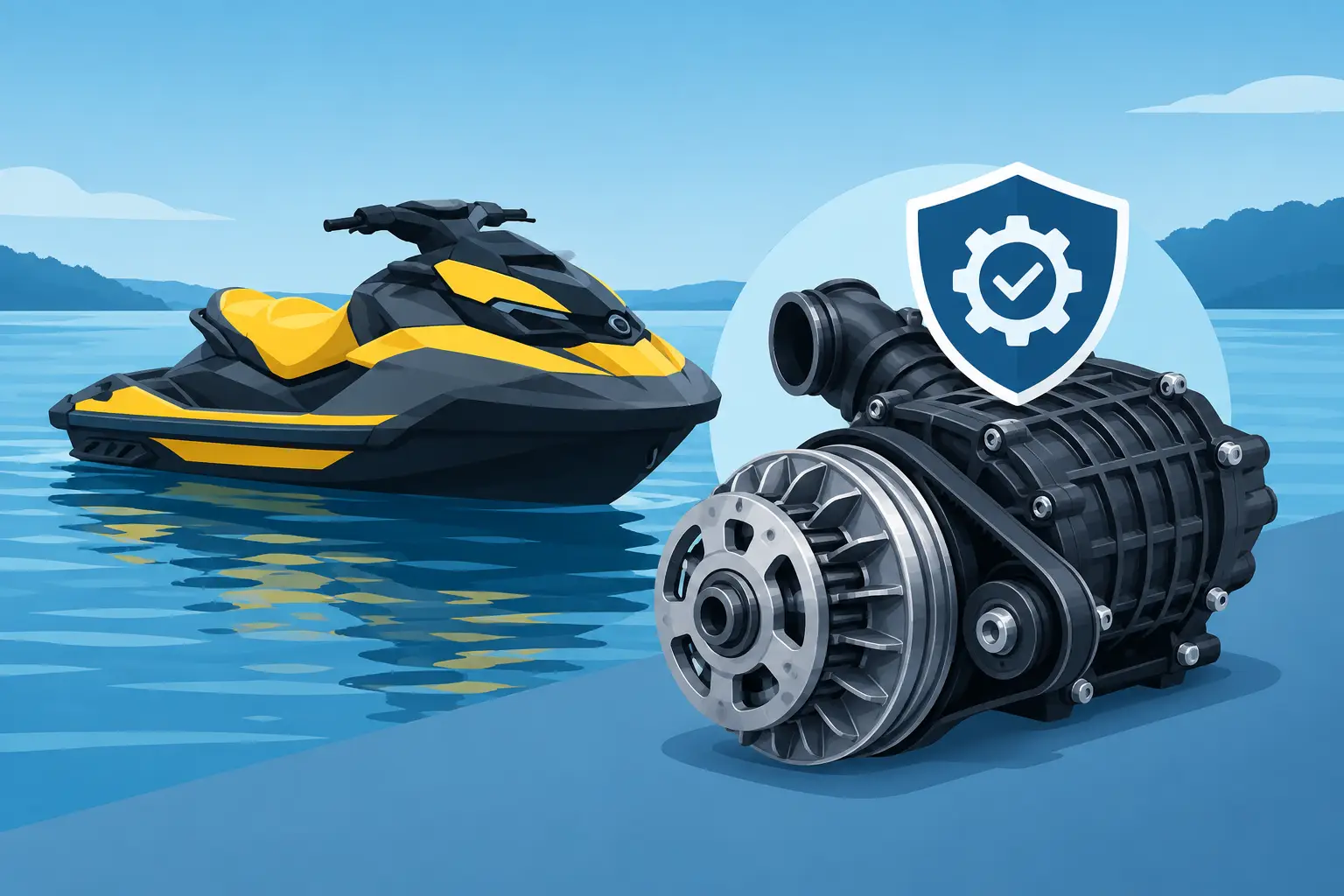
A Sea-Doo that feels lazy out of the hole, loses top-end pull or suddenly stops making the boost it once did is not always suffering from an engine problem. The supercharger clutch can be the weak link. Effective supercharger clutch prevention is about protecting boost, throttle response and the engine investment behind it – before a worn clutch turns a good day on the water into a costly workshop job.
On a performance PWC, the supercharger is not an accessory you fit and forget. It spins at extreme speed, works under heavy load and relies on correctly specified clutch components to transfer drive safely. If your ski is tuned, ridden hard, regularly carries passengers or sees rough-water throttle work, that system deserves more attention than a quick visual check at service time.
Why the supercharger clutch matters
Sea-Doo supercharger clutches are designed to manage the relationship between engine drive and supercharger speed. The clutch must hold enough load to make consistent boost, while retaining its intended protection characteristics under abnormal load. When it begins to slip beyond specification, supercharger speed falls. The result is reduced boost pressure, soft acceleration and a ski that simply does not feel like it should.
Ignoring clutch slip can create a chain reaction. A rider may keep applying more throttle to chase lost performance, increasing heat and load. If the supercharger assembly is worn, contaminated or incorrectly rebuilt, the issue can progress from reduced power to damage that affects the supercharger, intake system or engine.
The exact service requirements depend on the model, supercharger generation, engine modifications and how the ski is used. A standard recreational machine with a clean service history is different from a tuned RXT-X, RXP-X or jet boat that spends its life at high RPM. That is why a proper inspection matters more than relying on one blanket interval found in a forum post.
The main causes of clutch failure and slip
Missed rebuild intervals
The most common issue is simple: the clutch assembly has exceeded its practical service life. Internal washers, friction surfaces, springs and fasteners are wear items. They may look acceptable from the outside while their measured slip value tells a different story.
Older Sea-Doo supercharger configurations require particular care because their clutch components and service recommendations can differ from later assemblies. Never assume the parts fitted to another 4TEC engine are correct for yours. Verify the engine, model year, supercharger type and previous rebuild history before ordering parts or setting a maintenance plan.
Incorrect assembly or parts selection
A supercharger rebuild is precision work. Incorrect torque, unsuitable washers, damaged gears, poor component preparation or mixing incompatible parts can produce unreliable clutch performance. So can fitting a clutch calibration that does not suit the engine combination.
More holding force is not automatically better. A heavily modified engine may require a carefully selected clutch setup, but excessive clamping can move stress elsewhere in the drive system. The goal is stable, measured performance that matches the build – not the highest possible number on a test bench.
Oil contamination and poor servicing
Engine oil condition affects more than general lubrication. Fuel dilution, water contamination, excessive debris or the wrong oil specification can compromise the mechanical environment around the supercharger drive. Regular oil and filter servicing with the correct products gives a technician a chance to inspect for warning signs before they become major failures.
Water ingestion is another serious concern. A ski that has been sunk, rolled over for an extended period, ingested water through the intake or suffered cooling-system issues should not be treated as business as usual. It needs immediate assessment. Running it repeatedly in the hope that it clears itself can multiply the damage.
Heat, high RPM and aggressive use
Hard use is not a problem when the ski is built and maintained for it. But sustained high RPM, repeated launch acceleration, towing, race use and a higher boost tune all increase the demands on the supercharger and clutch. Modified skis also tend to reveal marginal components sooner because there is less room for wear or calibration error.
This does not mean performance owners should avoid using their machines properly. It means the maintenance schedule needs to reflect reality. A race-focused ski should be inspected on hours and condition, not only on calendar dates.
Supercharger clutch prevention starts with records
The best question a new-to-you Sea-Doo owner can ask is: when was the supercharger last rebuilt, and what exactly was replaced? A vague answer such as “it was done recently” is not a service record. You want the date, engine hours, parts used, workshop details and ideally the measured clutch slip result.
If that information is unavailable, budget for an inspection rather than gambling on it. This is especially relevant for second-hand performance PWCs, where an ECU tune, intake kit or exhaust may suggest hard use but reveal nothing about the condition of the clutch assembly.
Keep the same records after your own service. Note engine hours, oil service dates, supercharger work, tuning changes and any changes in performance. That history helps identify a developing problem early and gives your workshop a clearer starting point when diagnosing the ski.
What a proper inspection should include
A credible supercharger service is more than removing a component and fitting a few new parts. The assembly should be removed, inspected and measured by a technician who understands the relevant Sea-Doo platform. The clutch slip should be tested with the correct equipment and compared with the specification appropriate to that setup.
The supercharger itself should also be checked for bearing condition, wheel damage, shaft play and signs of contact or contamination. The surrounding drive components, oil condition and intake tract deserve attention too. A clutch problem can be the symptom, rather than the original cause.
For modified skis, inspection should include the full combination. ECU calibration, boost target, intercooler efficiency, intake configuration, fuel quality and engine health all influence how reliably the supercharger system operates. Treating the clutch in isolation can miss the reason it was overloaded in the first place.
Signs you should book the ski in now
Do not wait for a complete loss of boost. A gradual change is often the most useful warning. Pay attention if your Sea-Doo develops slower acceleration, reduced peak RPM, inconsistent pull at full throttle or noticeably worse top speed in comparable water conditions.
Unusual noises around the supercharger area, metallic debris found during an oil service, unexplained engine faults or evidence of water contamination are also reasons to stop guessing and arrange diagnosis. Performance changes can have several causes – wear ring condition, intercooler leaks, fuel issues, electronic faults and pump problems can feel similar – but the supercharger clutch needs to be ruled out properly.
Avoid trying to diagnose clutch health through sound alone or by making tuning changes. Increasing RPM limit, adding boost or loading an aggressive map onto a ski with an unknown supercharger history is a fast way to put a small issue under greater stress.
Prevention for tuned and race-built Sea-Doos
Once output rises beyond a mild factory-style setup, supercharger clutch prevention becomes part of the build plan. Choose components suited to the intended power level and make sure the tune, fuel system and cooling package support that output. A clutch that holds reliably on one setup may not be right after a major boost, camshaft or engine-internal upgrade.
It also pays to be honest about the ski’s workload. A machine used for short recreational bursts has different demands from one used for closed-course racing, offshore riding or repeated high-speed lake runs. The latter should have shorter inspection intervals and a more proactive approach to component replacement.
At VTECHTUNED, we see the strongest results when owners treat the supercharger as a serviceable performance system, not a mystery part that only gets attention after power disappears. Correct parts, accurate measurements and a tune matched to the mechanical package protect both performance and reliability.
A supercharger clutch rarely gives unlimited warning before it reaches its limit. Keep clear service records, respond to performance changes early and have the assembly checked by a specialist who can measure it properly. That is how you keep the boost where it belongs – on the water, not on the workshop invoice.



