
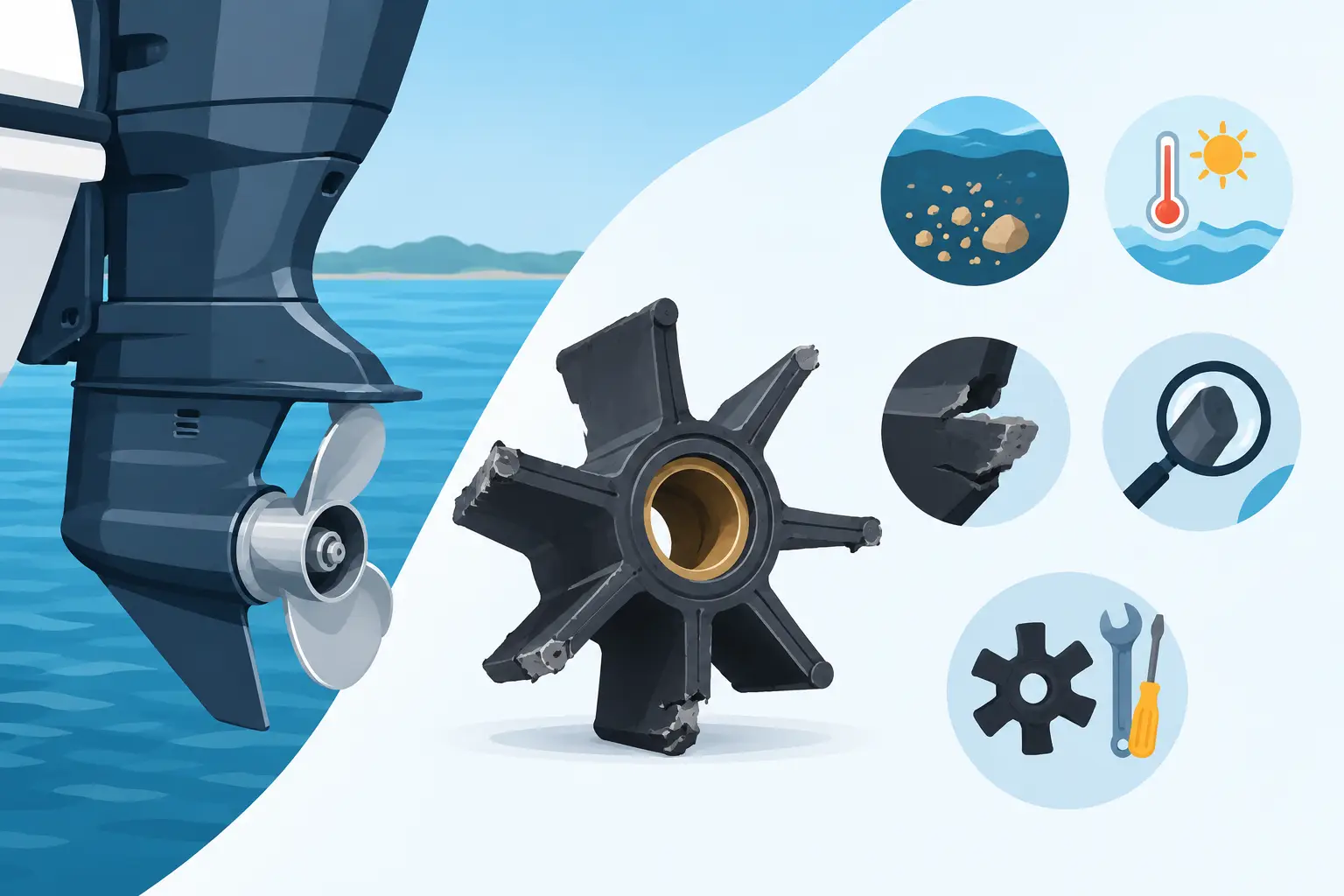
A Yamaha that suddenly revs harder but feels slower is not having a good day. Yamaha impeller damage is one of the first faults to investigate when acceleration goes soft, top speed drops, or the ski starts cavitating out of the hole. Ignore it and a relatively contained jet pump repair can turn into wear ring, housing, bearing or driveline damage.
For recreational riders, that can mean losing a full weekend on the water. For a modified supercharged or race-focused ski, it can also mean power that your engine is making never reaches the water. The jet pump is the final link in the chain. It deserves the same attention as your engine, intercooler and ECU calibration.
What Yamaha impeller damage feels like on the water
An impeller does not need to be completely destroyed to hurt performance. Even small nicks, rolled leading edges and bent blades disrupt water flow through the pump. At low speed, the issue may feel minor. Under hard throttle, the pump can aerate the water and lose its bite.
Common symptoms include a sharp rise in RPM without matching forward drive, hesitation when taking off, reduced top speed, vibration through the hull, or a pulsing sensation under acceleration. Some riders describe it as the ski “slipping” before it hooks up. Cavitation is particularly obvious when pulling away with passengers, launching in choppy water, or accelerating hard after a turn.
A loss of speed is not automatically an impeller problem. Fouling around the intake grate, a damaged wear ring, air leaks around the pump shoe, loose pump hardware and engine issues can create similar complaints. That is why a proper inspection matters. Replacing parts on a guess wastes money and can leave the real fault behind.
The causes of Yamaha impeller damage
The usual culprit is debris. Rocks, shells, sticks, fishing line and loose objects can enter the intake and strike the impeller at high speed. Riding too close to shore, crossing shallow sandbars, launching before there is enough depth, and reversing over debris all increase the risk.
Sand is also harsh on a jet pump. One pass through shallow water may not bend a blade, but repeated sand ingestion erodes the impeller edges and wear ring clearance. The result is a pump that gradually becomes less efficient rather than failing in one obvious moment.
Impact damage is another concern. A hard strike can bend an impeller blade, crack a wear ring or distort the pump housing. If the ski has hit an object, inspect more than the visible blade tips. A pump can look acceptable from the intake while hiding damage deeper in the stator, bearings or shaft assembly.
Modified skis place greater demand on the pump too. More engine power can expose an impeller that was already worn, incorrectly pitched for the setup, or poorly matched to the tune. An aggressive impeller is not automatically the right choice. Pitch, blade design, engine RPM, rider load and intended use must work together. A ski built for strong holeshot and a ski chasing top-end speed may need different pump hardware.
Damage can start outside the pump
Do not overlook the intake grate, ride plate, pump shoe and sealant around the pump mounting surface. A damaged or poorly sealed area can allow air into the water flow. That aerated water reaches the impeller and produces cavitation symptoms, even when the impeller itself is in reasonable condition.
This is especially relevant after fibreglass repairs, groundings, pump removal or an impact. The pump system works as a complete package. One damaged component can compromise the whole setup.
How to inspect the jet pump safely
Start with the ski out of the water, the engine switched off and the safety lanyard removed. Never reach into the intake while the engine is capable of starting. If debris is tightly wound around the shaft or difficult to access, do not force it with a screwdriver and create further damage.
Look through the intake grate with a bright light. You are checking for missing material, bent leading edges, deep gouges, cracks and foreign objects. Rotate the impeller carefully by hand only if it moves freely and it is safe to do so. Roughness, tight spots or side-to-side movement can point to a bearing or shaft issue rather than simple blade damage.
The clearance between the impeller and wear ring is equally important. A worn, melted or scored ring allows water to recirculate around the impeller instead of being driven through the pump. That loss of sealing reduces thrust and increases cavitation. On many Yamaha applications, the correct way to assess this is with the pump removed and measured against the specifications for that model and pump setup.
Check the impeller blades from every angle. A light mark may be repairable. A blade that is folded, cracked, severely chipped or rubbing the housing needs immediate attention. Also inspect the pump housing and stator vanes for scoring or impact marks. Replacing an impeller without addressing the damaged part that caused it is false economy.
Repair, replace or upgrade?
Minor edge damage can sometimes be professionally repaired and reconditioned. A specialist can restore the leading edge and confirm the impeller remains balanced and suitable for use. This can be a smart option where the base impeller is otherwise sound and the ski retains a stock or mild performance setup.
Replacement is the better decision when blades are badly bent, cracked, heavily corroded or missing material. It is also worth considering when the ski is receiving an engine build, supercharger upgrade or ECU tune. The original impeller may not be the best match for the new power curve.
A performance impeller should never be chosen only because it carries a more aggressive pitch number. Too much load can pull engine RPM below its effective range. Too little load can let the engine over-rev and create inconsistent acceleration. The correct selection depends on the Yamaha model, engine modifications, operating conditions, rider weight, fuel quality and whether the priority is towing, recreational riding, closed-course racing or top speed.
When fitting a new or rebuilt impeller, inspect and service the rest of the pump at the same time. Bearings, seals, cone condition, wear ring, pump housing, intake components and fasteners all deserve attention. This approach costs more than swapping one part, but it prevents a fresh impeller from being damaged by a worn bearing or distorted housing.
Do not keep riding through cavitation
A rider may be tempted to keep using the ski if it still planes and starts normally. That is risky. Cavitation generates heat and can accelerate wear in the pump system. If debris has caused the damage, more material may still be lodged where you cannot see it. If the ski has suffered an impact, continuing to ride can worsen a crack or bearing problem.
Stop riding if you have severe vibration, grinding noise, a sudden major speed loss, a jammed impeller or evidence of a pump leak. Tow the ski in if necessary rather than using repeated throttle bursts to clear the problem. Those bursts can turn a small fault into an expensive one.
Preventing future pump damage
The best protection is disciplined riding around the shoreline. Idle through shallow areas, avoid running the ski in water that is too shallow for the hull and pump, and shut the engine down before drifting over rocks, weed beds or debris. Take extra care after storms, floods and busy holiday periods, when submerged rubbish is far more common.
Flush the ski after saltwater use according to Yamaha’s procedure, and inspect the intake area regularly rather than waiting for a performance problem. Riders who use ramps with sandy approaches should be particularly vigilant. Sand ingestion is often gradual, which makes it easy to miss until the ski feels noticeably flat.
For modified Yamaha platforms, include pump inspection in the maintenance plan after major tuning or engine work. More power makes a healthy pump more important, not less. A professional setup should deliver crisp response, stable RPM and repeatable acceleration – not just a bigger number on a dyno sheet.
If your Yamaha has lost its bite, a proper pump inspection is the fastest way to protect performance and reliability. VTECHTUNED can assess the complete system, identify whether the issue is impeller damage or a related pump fault, and match repair or upgrade work to the way you actually ride.



